Pest activity in residential properties is rarely random. It follows patterns that are directly linked to temperature shifts, moisture levels, and the behavioural cycles of the species involved. For homeowners, understanding this connection is the first step toward a more informed and proactive approach to property protection.
Rather than responding to infestations after they become visible, a seasonal perspective allows for timely intervention, targeted prevention, and a clearer understanding of where and when vulnerabilities are most likely to emerge.
Table of Contents
● The Seasonal Framework
● Spring: Entry Points and Nesting Activity Begin
● Summer: Peak Population and Structural Pressure
● Autumn: The Transition That Invites Insects Indoors
● Winter: Hidden Activity and Overwintering Species
● Why Timing Matters in Pest Management
● The Property as a System
● Taking a More Considered Approach
The Seasonal Framework
Every season presents a different set of conditions for both properties and the pests that attempt to inhabit them. Warmth encourages reproduction and foraging. Moisture creates hospitable environments for certain species. Cold drives others to seek shelter in the warmth of occupied buildings.
For property owners, this means that pest pressure is not a fixed problem. It changes throughout the year, with different species becoming active or dormant, different entry points becoming relevant, and different areas of the home becoming vulnerable. A maintenance strategy that accounts for these shifts is considerably more effective than one that only reacts when a problem becomes visible.
Spring: Entry Points and Nesting Activity Begin
As temperatures begin to rise, a wide range of species that have been dormant through the colder months start to become active. This includes ants, which begin establishing new foraging trails and expanding colony networks, often directing workers toward kitchens and pantry areas in search of food sources.
It is also the period when queen wasps emerge from their overwintering sites to begin building new nests. At this early stage, nests are small and activity is limited, but the foundations for a much larger summer colony are already being established. Exterior walls, roof eaves, garden structures, and wall cavities are all common nesting locations.
For homeowners, spring is an ideal time to inspect exterior surfaces for gaps, cracks, and entry points, and to assess areas where previous pest activity has been observed. Addressing these vulnerabilities before activity intensifies is significantly more practical than managing a fully established infestation later in the year.
Summer: Peak Population and Structural Pressure
Summer is when pest populations reach their maximum size, and when pressure on the property is at its highest. Wasp colonies that began in spring can now contain thousands of workers. Ant colonies are in full foraging mode. Flies are more active, particularly in outdoor areas close to organic waste. Rodents, though active year-round, are more visible as they cover larger territories in search of food.
It is during this period that seasonal pests in the home tend to cause the most disruption, particularly in households where entry points have gone unaddressed. An unsealed gap beneath a door frame, a crack in a soffit, or an unscreened vent can all become regular access routes for insects and small mammals during peak summer months.
The structural implications are worth noting. Some pest species cause direct damage to building fabric. Carpenter ants, for example, excavate wood to create nesting galleries. Rodents gnaw through insulation, wiring, and pipe lagging. In both cases, the damage is cumulative and often not visible until it has progressed to a point where repair becomes considerably more involved.
Routine external inspections during summer, combined with attention to interior signs such as droppings, unusual sounds, or surface damage, allow property owners to identify issues while they are still manageable.
Autumn: The Transition That Invites Insects Indoors
Autumn represents a significant transition. As outdoor temperatures begin to fall, many species begin seeking warmer environments in which to overwinter. For residential properties, this translates into increased pressure at entry points as insects and small animals attempt to move indoors.
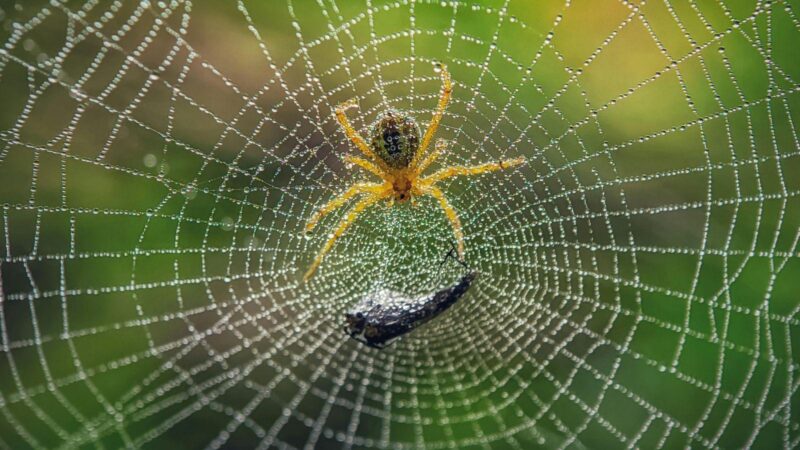
Cluster flies, stink bugs, boxelder bugs, and various spider species all exhibit this behaviour to varying degrees. They seek out sheltered cavities, wall voids, loft spaces, and the gaps around window and door frames. Once inside, many remain dormant until temperatures rise again, but their presence can still cause concern and, in some cases, secondary pest activity.
Rodent pressure also increases in autumn. Mice and rats seek warmth and consistent food access, and the transition period between seasons is when populations that have been active outdoors begin exploring the structural envelope of nearby buildings. Gaps in foundations, poorly fitted utility entry points, and deteriorating weatherstripping are all common access routes at this time of year.
Sealing known entry points before the colder months arrive is one of the most straightforward preventative steps a property owner can take. It is a measure that serves multiple purposes, improving thermal efficiency while also reducing the likelihood of unwanted occupants establishing themselves before winter.
Winter: Hidden Activity and Overwintering Species
Winter is often perceived as a period of minimal pest activity, and in some respects this is accurate. Many insect species are dormant, populations are at their lowest, and outdoor foraging has largely ceased. However, this season carries its own set of considerations for property owners.
Rodents that have gained entry during autumn may be actively nesting and breeding within wall cavities or beneath floor structures throughout the winter months. Because activity tends to be concentrated in hidden areas, the signs can be subtle. Gnawing sounds, evidence of nesting material, or the presence of droppings near entry points from concealed spaces are all indicators worth investigating.
Some insect species also remain active in heated environments. Cockroaches, in particular, are not governed by outdoor temperature in the same way as many other pests. Where conditions are warm, humid, and consistent, such as in kitchens, utility rooms, or commercial food preparation areas, populations can persist and expand regardless of the season.
Winter is also the period when overwintering queen wasps are sheltering in undisturbed corners, roof spaces, and timber structures. They pose no risk during this phase, but their presence confirms that the cycle will begin again in spring.
Why Timing Matters in Pest Management
The relationship between seasonal conditions and pest activity has a direct bearing on the effectiveness of management interventions. Treatments and preventative measures applied at the wrong point in a pest’s lifecycle are often less effective than those timed with an understanding of current conditions.
For instance, addressing a wasp nest in early spring, when the colony is still small and the queen is the only occupant, is a fundamentally different task from managing a colony that has grown over three months of summer. The scale of the intervention, the risk involved, and the likelihood of complete resolution are all affected by timing.
The same principle applies to rodent control, ant management, and insect exclusion. Each species has behavioural patterns that, once understood, make it possible to apply effort where it will have the most impact and the lowest risk.
The Property as a System
One of the most useful frameworks for thinking about pest pressure is to view the property as an interconnected system rather than a collection of separate spaces. Pest activity in one area often reflects conditions elsewhere. An ant trail in the kitchen may indicate a nest site in an external wall cavity. Rodent activity in the loft may be connected to a gap in the utility entry at ground level.
This systemic perspective encourages a more thorough approach to inspection and intervention. Addressing the visible sign of a problem without investigating its source tends to produce temporary results. Understanding where conditions are allowing pest activity to take hold, and why, leads to solutions that are more durable.
Regular inspection of the property’s exterior, particularly around entry points, drainage, vegetation contact, and roof edges, provides the clearest picture of where vulnerabilities exist and how seasonal conditions are interacting with the building’s structure.
Taking a More Considered Approach
Seasonal awareness does not require specialist knowledge. It requires consistency, observation, and a willingness to act on early indicators rather than waiting for problems to become unavoidable.
For most residential properties, this means conducting brief exterior inspections at each seasonal transition, addressing structural vulnerabilities as they are identified, and maintaining a clear understanding of which species are most active at any given time of year. It also means recognising when a situation has moved beyond what can be reasonably managed without professional support.
A property that is well understood and consistently maintained is one that is considerably less hospitable to pests at every point in the seasonal cycle. The goal is not to eliminate all pest activity from the surrounding environment, which is neither realistic nor ecologically appropriate, but to ensure that the property itself remains an environment where pests cannot easily establish, sustain, or expand their presence.