Keeping a property in good condition takes more than fresh paint and a well-mowed lawn. Homeowners who care about the long-term value of their houses know that pest activity, especially the kind that hides in corners and crawl spaces, can quietly undermine all that effort. Spiders are one of the most overlooked culprits, and in warm, humid regions they multiply fast when conditions are right. Understanding the early warning signs can save a homeowner from a much bigger cleanup down the road.
Florida’s climate, with its long stretches of heat and moisture, creates an ideal environment for spider populations to thrive indoors and out. Homeowners in coastal communities often notice an uptick in webbing and egg sacs during the wetter months, which is exactly when pest activity tends to spike. A detailed breakdown of 10 signs of spider infestations in port st lucie fl homes lays out the specific indicators local residents should watch for, and much of that guidance applies to any property owner trying to stay ahead of an infestation before it spreads.
Sign 1: Increased Web Sightings in Corners and Eaves
Cobwebs in an attic corner or along a porch eave are often dismissed as a cleaning oversight, but a sudden increase in web density usually points to something more active. Spiders rebuild webs quickly, so a corner that seems to collect new strands every few days is a strong indicator of a nearby nest. Eaves, window frames, and shed rooflines are common starting points because they offer shelter from wind and rain while still being close to insect activity outside. Homeowners who inspect these areas monthly tend to catch problems before they migrate indoors.
Sign 2: Multiple Spiders Spotted in Different Rooms
One spider in a basement is common and rarely worth worrying about. Seeing them in the kitchen, bathroom, and bedroom within the same week suggests a larger population working its way through the structure. This spread often happens along shared plumbing lines, wall voids, or attic access points that connect multiple rooms. Tracking where and when sightings occur can help a pest professional pinpoint the source much faster.
Sign 3: Egg Sacs and Spider Droppings
Egg sacs look like small silky pouches, often tucked into corners, under furniture, or behind stored boxes, and each one can hold dozens of spiderlings waiting to hatch. Finding several sacs in different areas of the home is a clear sign that a breeding population has settled in rather than a single wandering spider. Droppings, which resemble tiny dark specks, often accompany these sacs and indicate consistent feeding activity nearby. Ignoring these signs allows the population to expand exponentially within just a few weeks.
Sign 4: Unexplained Insect Bites or Skin Reactions
Waking up with small, itchy welts that were not there the night before is one of the more unsettling signs of a spider problem. While most household spiders are not aggressive, they will bite defensively if trapped against skin during sleep. Recurring bites, especially in the same general area of the home, warrant a closer inspection of bedding, closets, and nearby furniture. Anyone with sensitive skin or known allergies should treat repeated bites as a signal to investigate further rather than assume it is a one-time mosquito issue.
Sign 5: Dead Insects Wrapped in Webbing
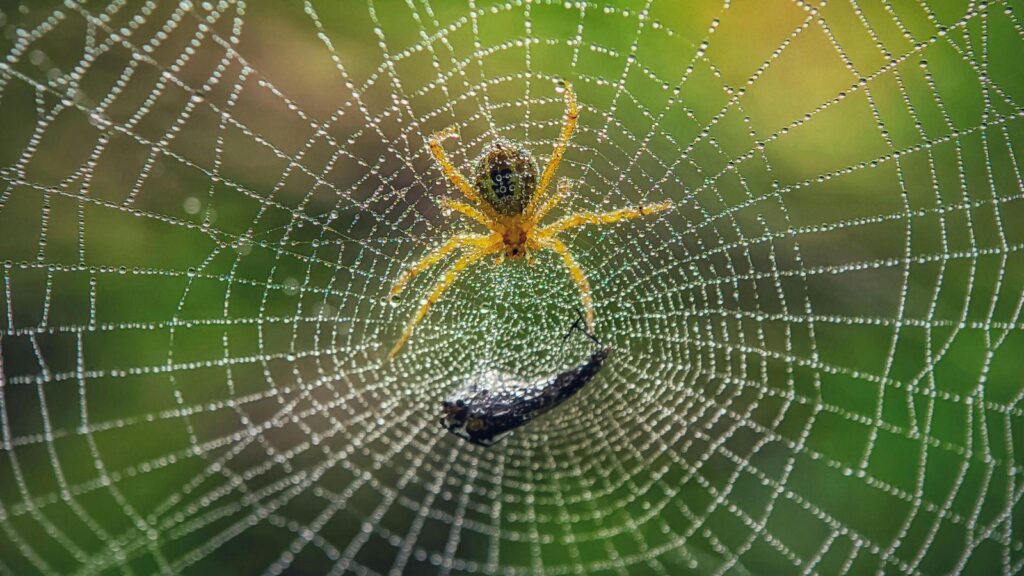
Spiders wrap prey in silk before feeding, so finding small insect carcasses bundled in webbing is a telltale sign of ongoing activity. This is often spotted in window sills, garage corners, or near outdoor light fixtures where insects are naturally drawn at night. A cluster of these wrapped remains in one area usually means a spider has claimed that spot as a reliable hunting ground. Removing them without addressing the source only offers temporary relief.
Sign 6: Sticky Residue on Walls and Furniture
A faint, tacky film on baseboards or furniture edges can be residue from silk threads that have broken down over time. Homeowners sometimes mistake this for dust buildup, but a slightly sticky texture that reappears after cleaning is worth a closer look. This residue tends to accumulate in areas with heavy foot traffic near a nest, since spiders repeatedly cross the same paths while hunting or maintaining their webs.
Sign 7: Spider Activity During Daytime Hours
Most household spiders prefer darkness and tend to stay hidden during the day, so seeing them move around in daylight can indicate overcrowding or a disturbed nest. When populations grow too large for the available shelter, some spiders are forced into more visible areas simply to find space or food. This shift in behavior is often one of the clearer signs that an infestation has moved beyond a manageable level.
Sign 8: Nests in Closets, Attics, or Basements
Dark, undisturbed storage areas are prime real estate for spider colonies, and homeowners often only discover them while pulling out seasonal decorations or old boxes. These spaces provide warmth, low traffic, and easy access to insects drawn in by stored fabrics or cardboard. A thorough seasonal check of these areas, similar to the kind of home maintenance routines highlighted on the property care blog, can catch infestations long before they become a bigger issue.
Sign 9: Spiders Near Food Storage Areas
Spiders themselves are not drawn to food, but they are drawn to the insects that are, which means pantries and kitchens with pest activity often develop spider problems as a side effect. Finding webs near cereal boxes or under sinks suggests an underlying insect issue that needs to be addressed at the same time. Sealing food containers and cleaning up crumbs quickly reduces the secondary insects that attract spiders in the first place.
Sign 10: Aggressive Behavior or Large Species Present
Most spiders retreat when disturbed, so encountering one that stands its ground or moves toward a person rather than away is worth noting. Larger species, or ones with unusual coloring, should be identified carefully since a few venomous types are known to inhabit Florida homes. This is the point where professional identification becomes important rather than optional.
When to Call a Professional Pest Control Service
Once multiple signs overlap, such as egg sacs alongside daytime activity or repeated bites, it is time to bring in a licensed pest control provider rather than relying on store-bought sprays. Professionals can identify species, locate hidden nests, and apply treatments that address both spiders and the insects they feed on. This combined approach tends to produce longer-lasting results than DIY methods that only target visible webs. Good indoor air quality also plays a role in pest prevention, since excess moisture and poor ventilation, as outlined by the EPA, can create the exact conditions spiders and their prey favor.
Prevention Tips for Long-Term Spider Control
Sealing cracks around windows, doors, and utility lines removes easy entry points that spiders and insects rely on to get inside. Reducing outdoor lighting near entrances, or switching to yellow-toned bulbs, cuts down on the insects that attract spiders in the first place. Regular vacuuming of corners, closets, and storage areas disrupts nest-building before it becomes established.
|
Humidity Level Indoors |
Recommended Range |
|
Ideal for pest prevention |
30 percent to 50 percent |
|
High risk for pest activity |
Above 60 percent |
|
Common source of excess moisture |
Poor ventilation, leaks, crawl spaces |
Staying ahead of a spider infestation ultimately comes down to consistent observation and quick action when the early signs appear. Homeowners who treat pest control as part of routine property maintenance, rather than a reaction to a full-blown problem, tend to spend far less on repairs and treatments over time. A little vigilance in the attic, closets, and around entry points goes a long way toward keeping a home comfortable and pest-free year round.