

Every insulated carport article in Australia makes the same two claims: cooler in summer, quieter in rain. Both are true. Neither is explained in a way that helps you evaluate whether the specific product being sold to you will actually deliver on those claims, or how much better a properly specified insulated panel is compared to a budget alternative that is technically also insulated.
The gap between a well-specified insulated carport roof and a poorly specified one is significant, and it is measurable in the temperature of the space beneath it, the noise level during a Queensland downpour, and how long the panel maintains its performance across 15 to 20 years of Australian conditions. Understanding the physics behind these differences allows you to have a genuinely informed conversation about specification rather than simply comparing price per square metre for products that are described with the same words but perform quite differently.
This is what a properly built insulated carport does that a standard single-skin steel roof cannot, and why the specification details matter as much as the structure.
What Is Actually Happening Inside an Insulated Panel
An insulated roofing panel is a sandwich structure: two steel skins bonded to a rigid foam core. The outer skin faces the sun and weather. The inner skin forms the ceiling surface of the space below. The foam core between them is the insulating layer that determines most of the panel’s thermal and acoustic performance.
The physics of how this structure manages heat involves three mechanisms that operate simultaneously.
Radiant heat reflection occurs at the outer steel skin. A steel surface painted in a light Colorbond colour reflects a significant proportion of incident solar radiation rather than absorbing it. A dark colour absorbs more and reflects less. This is why colour selection matters for a roof that will be in direct sun: a Surfmist or Paperbark panel under direct Queensland summer sun absorbs meaningfully less solar radiation than the same panel in Monument or Basalt, which translates directly into less heat entering the panel system from the outset.
Conductive heat transfer is what the foam core primarily addresses. Heat that is absorbed at the outer skin attempts to conduct through the panel to the inner skin via the materials between them. In a single-skin steel roof, there is nothing between the hot outer surface and the space below: the heat conducts directly through the metal. In an insulated panel, the foam core has a thermal conductivity many times lower than steel, dramatically slowing the rate at which absorbed heat moves from the outer skin to the inner surface.
The measure of a material’s resistance to conductive heat flow is its R-value. Higher R-values indicate greater resistance to heat conduction and therefore better thermal performance. For insulated roofing panels, the R-value is primarily determined by the thickness and density of the foam core. A 75-millimetre panel has a higher R-value than a 50-millimetre panel of the same foam formulation. A high-density polyurethane core has a higher R-value per millimetre than lower-density alternatives.
Radiant heat emission from the inner skin into the space below is the third mechanism. Even after conductive transfer through the panel has been slowed, the inner skin still emits radiant heat into the space beneath it. The emissivity of the inner skin surface, which is how readily it radiates heat, affects how much of the small amount of heat that has conducted through the panel is then radiated downward into the occupied space. A smooth, reflective inner skin surface has lower emissivity than a rougher or darker one, further reducing the heat input to the space below.
These three mechanisms working together are why a well-specified insulated panel, with a reflective outer colour, a thick high-density foam core, and a low-emissivity inner surface, performs substantially better than the sum of its parts suggests. And why comparing insulated panels solely on the basis of whether they are insulated, rather than on the specific R-value, core density, skin gauge, and inner surface specification, leaves a large performance variable unexamined.
The R-Value Numbers That Actually Matter for Queensland
In Queensland’s climate, a carport roof faces a specific and demanding set of thermal conditions. Summer sun angles are high, meaning the roof surface receives more direct radiation than in southern states for a larger proportion of the day. Ambient temperatures in South East Queensland regularly exceed 30 degrees Celsius through the summer months, and in western and northern Queensland they extend well above that. The temperature differential between the outer roof surface in direct summer sun and a comfortable indoor temperature can reach 50 to 60 degrees Celsius on a peak summer day.
For Queensland conditions, insulated carport panels are typically available in core thicknesses from 50 millimetres to 100 millimetres or more, with corresponding R-values ranging from approximately R1.5 to R4.0 or above depending on the foam formulation and density. The practical difference between an R2.0 panel and an R3.5 panel in Queensland’s summer conditions is real and measurable, not a theoretical increment.
Real-temperature test data from Australian conditions shows inner surface temperatures of insulated panels running 15 to 25 degrees Celsius cooler than single-skin steel under equivalent summer sun exposure, with higher-R-value panels performing at the upper end of this range. The air temperature in the space beneath a well-specified insulated carport can be 8 to 12 degrees Celsius cooler than beneath an equivalent single-skin roof during peak summer conditions. For a carport that connects to the home’s living spaces, this temperature reduction also reduces the thermal load on rooms adjacent to or beneath the carport roof.
The R-value of a panel is a quantity that can be verified: manufacturers publish R-value data in their technical documentation, and independent certification to the relevant Australian Standard is available for products tested in Australian conditions. Asking for the specific R-value of any insulated panel being proposed for your carport, and confirming it has been tested to Australian Standards, is a straightforward verification that separates a genuine performance claim from a marketing description.
The Acoustic Performance That Queensland Weather Tests Every Summer
Queensland’s summer storm season produces rainfall intensities that are among the highest in Australia. Convective storms tracking through South East Queensland regularly deliver 50 to 100 millimetres of rain per hour during the most intense periods, and the noise produced by that rainfall on a single-skin steel roof is substantial. Conversation beneath a single-skin steel carport during a moderate summer storm is difficult. During an intense storm, it is essentially impossible.
The acoustic performance of an insulated panel comes from two distinct mechanisms: the mass of the panel and the damping effect of the foam core.
Mass reduces the vibration response of the panel to impact. A heavier panel vibrates less per unit of rain impact energy than a lighter one. The two steel skins of an insulated panel, together with the foam core between them, produce a total panel mass substantially greater than a single steel sheet of equivalent roof coverage. This mass advantage alone reduces the vibration amplitude and therefore the sound level produced by rain impact.
The foam core adds a damping mechanism. When the outer skin vibrates under rain impact, that vibration attempts to propagate through the panel structure to the inner skin, which would then radiate sound into the space below. The foam core is a viscoelastic material that absorbs and dissipates vibrational energy rather than transmitting it. The result is that a significant proportion of the impact energy is converted to heat within the core rather than being transmitted as sound to the inner surface.
Published testing in Australian conditions shows sound level reductions of 10 to 14 decibels for insulated panels compared to single-skin steel roofing under equivalent rainfall conditions. A 10-decibel reduction is perceived by the human ear as approximately half the loudness of the original sound. This is the difference between a carport that is uncomfortably loud during a Queensland storm and one where normal conversation is possible. For a carport that connects to outdoor living areas, workshop spaces, or a home gym, this difference is not trivial.
Steel Skin Gauge and Why It Determines Long-Term Performance
The foam core gets most of the attention in insulated panel marketing, but the gauge of the steel skins is equally important for long-term performance and is less commonly specified in competitive comparisons.
Skin gauge refers to the thickness of the steel sheet used for the outer and inner skins of the panel. Thicker gauge steel is heavier, stronger, more resistant to denting and impact damage, and more resistant to the thermal cycling stresses that work on the panel through years of daily temperature change.
In Queensland’s climate, the outer skin of a carport panel faces an extraordinary thermal cycling regime. From near ambient temperature in the early morning to potentially 60 to 70 degrees Celsius on the upper surface in direct summer sun, and back to ambient overnight. Multiplied across 300 or more days of significant sun exposure per year, this repeated expansion and contraction imposes fatigue stresses on the panel’s bonded structure, the connection between the steel skins and the foam core.
A panel with heavier-gauge outer skin maintains its dimensional stability under thermal cycling better than one with lighter-gauge material. The bond between the skin and the core is less stressed because the skin expands and contracts less dramatically relative to the foam. Over the 15 to 20-year life of a carport roof, this difference in skin gauge is one of the factors that determines whether the bond between skin and core remains intact and the panel continues to perform as specified, or whether delamination between skin and core gradually reduces the panel’s acoustic and thermal performance.
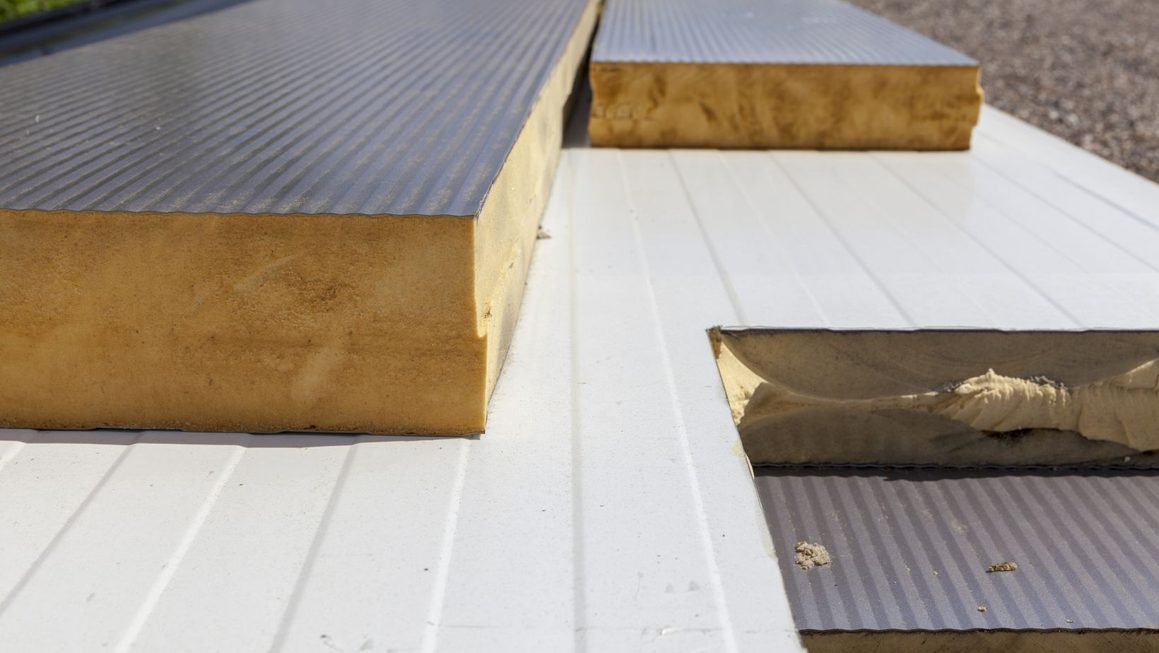
Standard market insulated panels typically use outer skin gauges from 0.42 millimetres to 0.55 millimetres BMT (base metal thickness). Quality commercial-grade panels use 0.48 to 0.55 millimetres. The difference of 0.06 to 0.13 millimetres sounds trivial but represents a meaningful difference in mass, rigidity, and thermal cycling resilience over the panel’s operating life. Asking for the skin gauge specification of any insulated panel being proposed is a simple technical question that produces a directly comparable performance indicator.
How Insulated Panels Interact With the Adjacent Home
For an attached insulated carport, the panel’s thermal performance affects not just the comfort of the carport space itself but the thermal performance of the rooms adjacent to or beneath the carport roof connection point.
A carport roof that connects to the exterior wall of a home creates a potential pathway for heat to move from the hot roof surface through the connection detail into the wall cavity or roof space of the adjacent room. The quality of the flashing and thermal break at the wall-to-carport junction affects whether this heat transfer pathway is managed or left open.
A well-designed attached carport connection includes a thermal break between the hot steel fascia of the carport roof and the wall framing of the home, preventing direct conduction of heat from the roof structure into the wall. It also includes proper flashing that directs any water that enters the junction away from the wall cavity rather than into it.
For homes where the carport is positioned on the north or west elevation, this junction detail is particularly relevant because those elevations experience the highest solar loads and therefore the greatest temperature differential between the carport roof and the cooler interior of the home. An insulated carport panel that performs excellently in isolation can have its benefit partially undermined by a poorly designed connection to the building if the junction allows heat to bypass the insulated panel via the structural connection.
This is a detail that is rarely discussed in insulated carport marketing content but that experienced builders consider as part of the carport design rather than as an afterthought. Asking specifically how the wall-to-carport junction is detailed and thermally managed is a useful quality indicator when comparing builders.
The Condensation Consideration for Queensland’s Winter Mornings
Queensland’s Mediterranean and subtropical climate creates a specific winter condition that single-skin steel carport roofs are more prone to than insulated panels: condensation on the inner roof surface.
In the cooler months, overnight temperatures in South East Queensland can drop to 8 to 12 degrees Celsius. A single-skin steel roof that has cooled to near ambient overnight presents a cold inner surface to the warmer, more humid air of the following morning. When the dew point of the morning air exceeds the temperature of the roof surface, moisture condenses on the inner surface and drips into the carport space below.
For a carport used primarily for vehicle storage, condensation drips onto a car’s paintwork in the early morning. For a carport used as an outdoor living or workshop space, condensation drips onto surfaces, tools, and furniture. The problem typically resolves by mid-morning as the roof warms under the sun, but it occurs repeatedly through the cooler months.
An insulated panel has a warmer inner surface temperature than a single-skin roof because the foam core slows the cooling of the inner skin overnight. Where a single-skin roof might reach 8 degrees Celsius by 5am on a cool morning, a well-specified insulated panel in the same conditions may retain an inner surface temperature of 14 to 16 degrees Celsius. This higher surface temperature reduces the frequency and severity of condensation events because the inner surface temperature is more likely to remain above the morning dew point.
For Queensland homeowners who use their carport as an outdoor living space or who park premium vehicles under it, this winter condensation resistance is a practical benefit of insulated panels that the standard marketing content does not mention.
The Specification Checklist Before You Accept Any Quote
Understanding the physics and the performance mechanisms above allows a more useful comparison of insulated carport proposals than a simple price comparison. These are the specific specification points worth confirming in writing before committing to any insulated carport installation.
Panel R-value: The thermal resistance of the specific panel being proposed, tested to the relevant Australian Standard. Not a brand claim or a general statement about insulated panels, but the specific R-value number.
Core density and foam formulation: The type and density of the foam core. High-density polyurethane performs better per millimetre of thickness than lower-density alternatives. The density is a verifiable specification available in the product’s technical documentation.
Outer skin gauge in BMT: The base metal thickness of the outer skin in millimetres. Anything below 0.42mm BMT warrants further scrutiny for a Queensland installation that will face significant thermal cycling.
Outer colour solar absorptance: Lighter colours absorb less solar radiation and perform better thermally under direct Queensland sun. The solar absorptance value of the specific Colorbond colour being proposed is available from BlueScope and provides a directly comparable thermal input variable.
Acoustic rating: The sound reduction performance of the panel in decibels under standard rainfall testing. Not a qualitative description but a measurable number.
Wall junction detail for attached structures: The specific thermal break and flashing detail proposed for the point where the carport roof connects to the home’s exterior wall, particularly relevant for north or west-facing connections.
Warranty terms: The specific warranty covering panel delamination, which is the failure mode most directly related to long-term thermal cycling performance in Queensland conditions. A manufacturer confident in their panel’s long-term bonded integrity will offer meaningful warranty coverage against delamination.
The Value That Persists Across the Structure’s Lifetime
The premium paid for a properly specified insulated carport panel over a single-skin alternative is typically recovered within the first few years of ownership through the tangible daily benefits: the usable outdoor space that a comfortable, quiet covered area creates, the reduction in thermal load on adjacent rooms, the resistance to condensation, and the absence of the noise that makes a single-skin carport uncomfortable during Queensland’s summer storm season.
Over the 15 to 20-year life of a quality carport structure, a panel that maintains its bond integrity, retains its R-value, and holds its acoustic performance across thousands of thermal cycles delivers considerably more value than the upfront cost premium implies. A panel that delaminates within five to seven years, losing the air gap that contributes to both its thermal and acoustic performance, delivers considerably less.
The specification details described above are the difference between those two outcomes. They are not complicated to evaluate once you know what to ask for, and they are the most reliable basis for comparing insulated carport proposals from different builders beyond price alone.


