Owning a home means something will always need fixing, and that’s not pessimism; it’s just how houses work.
Plumbing wears out, drywall cracks, weatherstripping deteriorates, and HVAC filters clog up faster than anyone expects.
The difference between a homeowner who stays ahead and one who’s always reacting comes down to knowing which home repairs actually matter and which ones can wait.
Companies like Eco Home Repair have built their entire approach around helping homeowners make those smarter repair decisions.
Know What’s Urgent and What’s Just Annoying
Not every home repair deserves the same level of panic.
A dripping kitchen faucet wastes water and money, sure, but it won’t destroy your subfloor overnight.
A leaking water heater, on the other hand, can cause thousands in damage within hours.
Learning to triage problems is one of the most valuable skills a homeowner can develop.
Structural issues always come first.
Foundation cracks wider than a quarter-inch, a roof with missing shingles before storm season, or a breaker panel that trips repeatedly all need immediate attention.
Cosmetic stuff like chipped paint on baseboards or a squeaky door hinge?
That’s a weekend project when you feel like it.
If the problem gets worse with time or affects household safety, it moves to the top of the list.
The Home Repairs Most People Put Off Too Long
Some jobs sit on the to-do list for months because they seem small.
But small doesn’t mean harmless.
Caulking around bathtubs and showers, for instance, is a twenty-minute fix that prevents moisture from seeping into wall cavities.
Leave it, and you’re looking at potential mold remediation that costs several thousand dollars.
Gutter cleaning is another one most people ignore until water starts pooling near the foundation.
Clogged gutters redirect rainwater right along your foundation walls and into your basement.
The fix is cheap.
The consequences of ignoring it are not.
Replacing worn weatherstripping costs a few dollars per door at any hardware store like Home Depot or Lowe’s, yet it can shave a noticeable amount off heating and cooling bills every single month.
DIY vs. Hiring a Professional
There’s a real satisfaction in handling repairs yourself.
Swapping out a toilet flapper valve, patching drywall, replacing light switches, or installing a new Moen kitchen faucet are all within reach for anyone willing to watch a decent YouTube tutorial.
But some jobs genuinely need a licensed professional.
Anything involving your home’s electrical panel, gas lines, or structural load-bearing walls falls into that category.
It’s not about skill; it’s about safety codes, permits, and liability.
A bad electrical connection behind a wall can smolder for weeks before catching fire.
Plumbing sits somewhere in between.
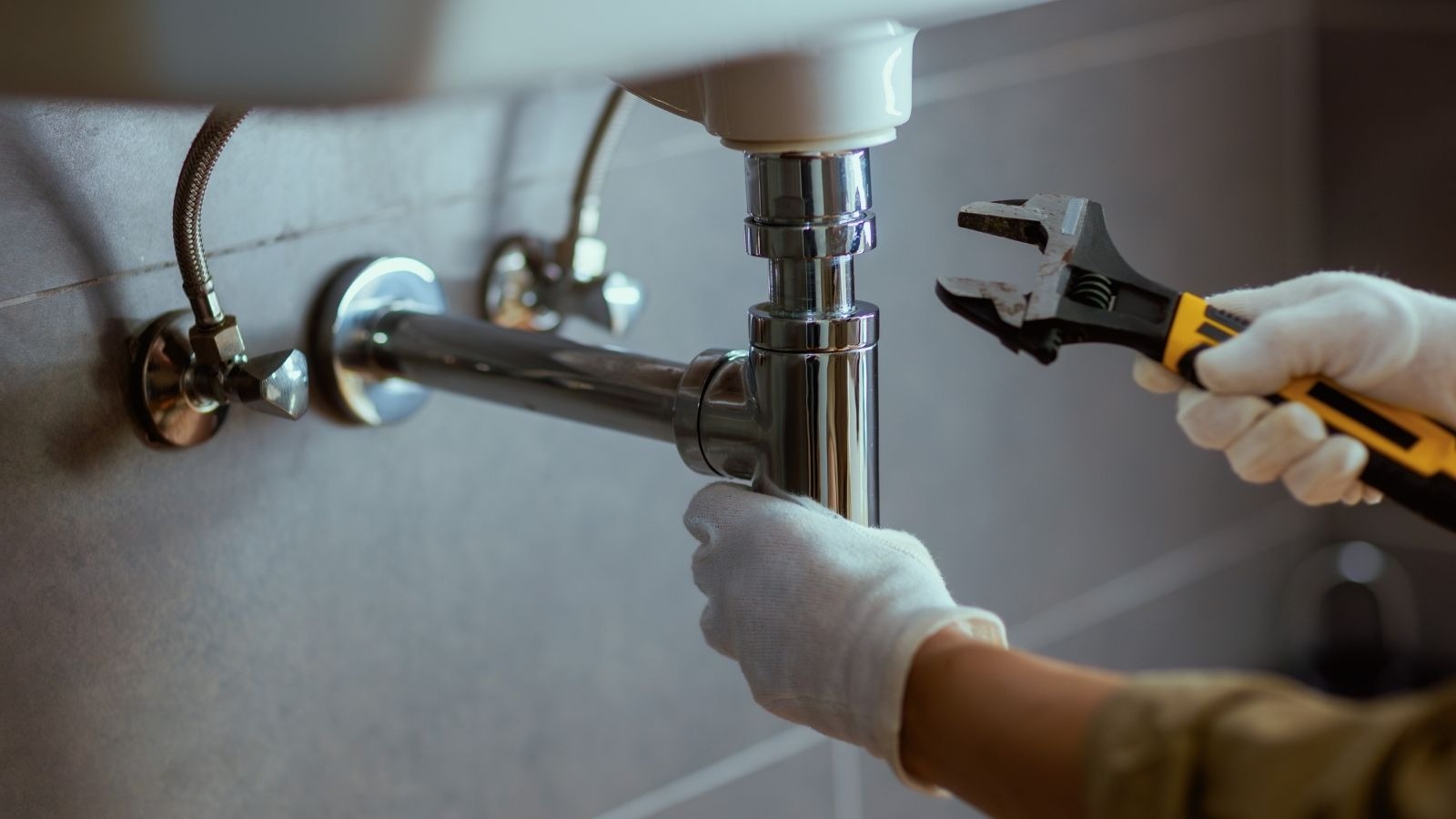
Replacing a P-trap under a bathroom sink is straightforward, while re-piping a section with PEX tubing requires knowing how your system is laid out and what your local building codes allow.
When in doubt, get a quote from a reputable plumber.
Building a Home Repair Budget That Works
The old advice says to set aside one to two percent of your home’s value annually for maintenance and repairs.
For a $350,000 house, that’s $3,500 to $7,000 per year.
It sounds like a lot, but anyone who’s replaced a furnace or dealt with a sewer line backup knows that number can disappear in a single repair.
A more practical approach is to split your budget into two buckets: planned maintenance and an emergency fund.
Planned maintenance covers things you know are coming, like replacing the water heater after ten years or painting the exterior trim.
The emergency fund handles surprises, like a burst pipe during a January cold snap.
Keeping a simple spreadsheet with the age and expected lifespan of major systems gives you a rough timeline for when big expenses are coming.
Sustainable Approaches to Home Repair
There’s a growing shift toward making repairs that are both effective and environmentally responsible.
This isn’t about spending more for a green label.
It’s about choosing materials and methods that last longer, reduce waste, and lower your home’s energy consumption over time.
Low-VOC paints from brands like Benjamin Moore Natura or Sherwin-Williams Harmony perform just as well as conventional options without off-gassing harmful chemicals into your living space.
Insulation upgrades using recycled denim batts or blown-in cellulose can dramatically improve thermal performance while keeping synthetic materials out of landfills.
Even smaller decisions add up.
Choosing Energy Star-rated replacement windows, opting for a tankless water heater, or installing a smart thermostat like the Nest Learning Thermostat all reduce monthly utility costs while extending the life of your home’s core systems.
Seasonal Maintenance That Prevents Expensive Repairs
Most big home repair bills start as small maintenance tasks that got skipped.
A seasonal checklist doesn’t need to be complicated, but sticking to one makes an enormous difference over five or ten years.
In spring, inspect the roof for winter damage, clear debris from downspout extensions, and test your sump pump before heavy rain season hits.
Summer is the time for exterior painting, deck staining with a product like Thompson’s WaterSeal, and checking that your central air conditioning system has proper refrigerant levels.
Fall means cleaning the gutters, servicing your furnace, and checking attic insulation depth.
The Department of Energy recommends R-38 to R-60 for most attics, depending on your climate zone.
Winter maintenance is mostly about vigilance: watching for ice dams along roof eaves, monitoring pipes in unheated areas, and making sure carbon monoxide detectors have fresh batteries.
The Bottom Line
Home repair doesn’t have to be overwhelming or wallet-draining.
The homeowners who spend the least over the long run are the ones who stay proactive rather than reactive.
Catch problems early, handle the simple stuff yourself, and know exactly when to call in a professional.
Your house is the biggest investment most people ever make.
Treating its upkeep as routine rather than crisis management is the smartest repair strategy there is.