For centuries, bathing has been regarded as one of the simplest ways to relax, but in Japan it has taken on the significance of almost spiritual renewal. Today, when our everyday lives are shaped by constant haste, returning to traditional methods of relaxation is becoming not just a trend, but a genuine necessity. With the right mindset and the right bathtub, it is possible to transform your bathroom into a private oasis of calm.
The Roots of Deep Relaxation
At a time when the Western world treated the bathtub solely as a tool for maintaining hygiene, Japanese culture developed a completely different approach. Bathing was meant to be a moment of quiet reflection and regeneration, while washing took place in separate spaces altogether. It was precisely this distinction that gave rise to the concept of deep bathtubs designed not for washing, but for complete bodily immersion.
A traditional ofuro bathtub is usually taller and shorter than its Western counterparts. This design is far from accidental. It allows for comfortable upright sitting, with the water reaching all the way up to the shoulders. As a result, it naturally encourages deeper breathing and helps release tension in the back and neck muscles. There is no room here for careless splashing – this is a space created for being fully present in the moment.
Purity of Form and Material
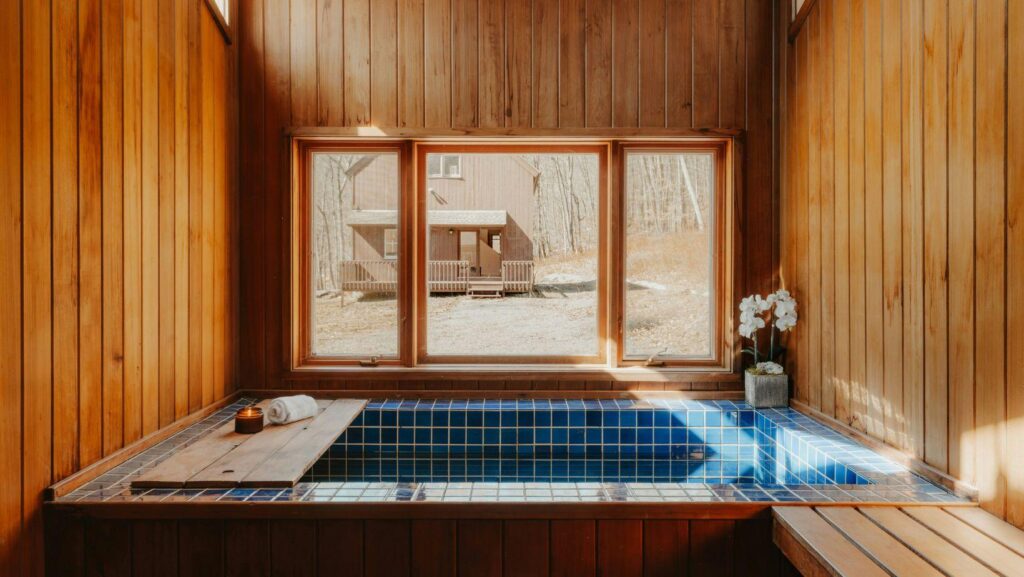
The secret to effective relaxation lies in carefully selected materials that not only please the eye, but also have a real impact on our well-being. Traditional in form, a wooden japanese bathtub brings the breath of nature into the interior. The warmth of wood, its texture, and its subtle scent all enhance the feeling of comfort and serenity. The use of wood species such as oak, ash, or walnut gives each bathtub its own unique character.
Why choose such a solution instead of the more common acrylic or ceramic options? There are several practical reasons:
- Wood provides excellent thermal insulation, which means the water stays hot for longer without the need for constantly adding more hot water.
- Properly treated hardwood species offer high resistance to moisture.
- The vertical design helps save floor space, which is invaluable in smaller bathrooms.
- Contact with a natural material has a positive effect on the nervous system and helps reduce stress.
How to Prepare for the Bath
True enjoyment of a Japanese bath requires a little preparation and a shift in habits. Before entering the tub, you should wash your body thoroughly in the shower. The water inside the bath must remain crystal clear, free from soap or shampoo. Only after rinsing your skin completely does the time come to immerse yourself.
The water itself should be warm – the recommended temperature is usually around 40 degrees Celsius. Does that not sound like the perfect recipe for a winter evening? A few drops of essential oil, such as hinoki, or some natural bath salts can enhance the experience, although simply being enveloped by warm water already works wonders. Just a few minutes of such a ritual can improve circulation and help prepare the body for restful sleep.
From Tradition to Modernity
Although the idea comes from a centuries-old tradition, its contemporary interpretations fit beautifully into modern interiors. Depending on your needs, you can choose from a variety of options – from classic square and rectangular forms that complement minimalist design, to softer, round shapes that bring a sense of lightness to the space.
Modern craftsmanship makes it possible to combine the beauty of wood with complete waterproofing and the safety required for everyday use. For those seeking shared relaxation, models with double seating are also available, allowing peaceful moments to be enjoyed together. Regardless of which version you choose, the principle remains the same – it is an investment in the time we so often lack in our daily lives. Time to pause, slow down, and regain balance.