Most fall protection plans look solid on paper. The anchor points are rated. The tie-off method is approved. The rescue plan is documented. The equipment meets the right ANSI and OSHA requirements.
Then the job starts.
A worker climbs a ladder with tools in one hand. Steps onto a platform. Leans around ductwork. Repositions to reach the far side of a beam. Shifts weight. Twists. Moves again. Works in short bursts, not static poses.
That’s the real gap in working-at-height safety:
The difference between how safety is planned in theory and how work actually happens in motion. Designing effective fall protection, like fall restraint lanyards, means designing for movement, unpredictability, and real jobsite behavior, not idealized working conditions.
The Jobsite Is Dynamic, Not Static
The jobsite is dynamic by nature, not static or predictable. Fall hazards are rarely found in perfectly controlled environments where a worker can stay in one position and remain safely tied off without adjustment.
Real height work happens in steel erection zones where anchor options change as the structure goes up, on utility towers with limited tie-off access, across rooftops with uneven edges and unexpected obstacles, and on scaffolding where workers are constantly climbing, stepping, and repositioning.
Even in mobile elevating work platforms (MEWPs), travel and reach shift minute by minute as the lift moves and the work zone changes. In these environments, workers are not standing still; they are climbing, transitioning between surfaces, reaching outward, rotating their torso, stepping over obstructions, and moving horizontally along elevated structures to complete the task. That constant motion is exactly where risk increases.
Safety systems must be designed around real movement patterns, not an idealized scenario in which the worker stays perfectly centered, upright, and stationary. If a fall protection setup only works in theory, but breaks down the moment the job requires natural repositioning, then it’s not truly job-ready.
The Full Body Harness Is the Foundation, But Only If It Fits the Work
The full-body harness is the primary interface between the worker and the fall protection system.
But a harness is not just a compliance item. It is a piece of wearable equipment that must perform under real conditions, including:
- Body movement
- Suspension forces
- Repeated climbing
- Awkward positioning
- Long-duration wear
A harness that restricts mobility or causes discomfort leads to predictable outcomes, such as:
- Workers loosen straps
- D-rings sit incorrectly
- Tie-off becomes inconsistent
- Fatigue increases
- Misuse becomes more likely
Safety doesn’t fail because people don’t care. It fails because systems don’t align with how people actually work.
Proper Harness Fit Is Functional Engineering
A major disconnect in fall safety is treating harness fit as a one-time adjustment instead of an operational requirement. Proper harness fit determines whether the system will function correctly in a fall event and whether the worker can move safely before a fall ever occurs.
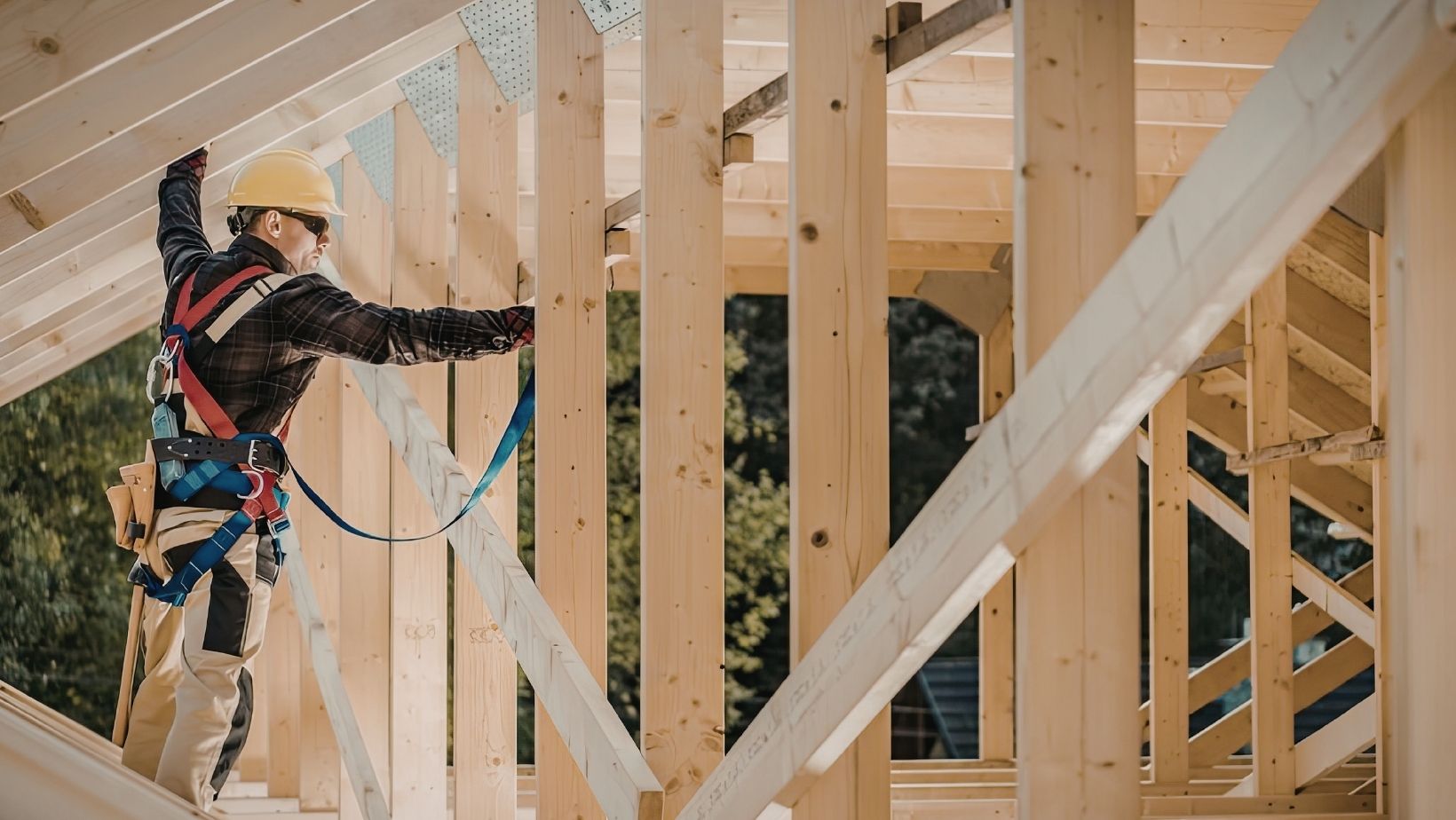
Poor fit creates real-world problems:
- Shoulder straps shift during climbing.
- Leg straps ride up or loosen.
- The dorsal D-ring sits too low.
- Sub-pelvic support is compromised.
- Equipment becomes uncomfortable enough to encourage shortcuts.
Fit impacts more than comfort. It affects:
- Load distribution
- Arrest performance
- Worker posture
- Mobility during repositioning
- Suspension tolerance
Fit must be treated as part of job design, not paperwork.
Most Falls Happen During Transitions, Not While “Working”
Safety planning often focuses on the work position:
- Standing on the platform
- Welding at the connection
- Installing equipment
- Performing the repair
But many fall events occur during moments of transition:
- Moving from ladder to structure
- Switching tie-off points
- Climbing past obstructions
- Walking the deck edge
- Stepping onto a lift
These are the moments where movement is highest, and stability is lowest. The system must support safe behavior during transitions, not just during the task itself. That means designing for:
- Continuous connection
- Controlled reach
- Predictable restraint
- Minimal slack
- Clear anchor strategy
Fall Restraint Is Often the Best Design Because It Prevents the Fall Entirely
Fall arrest gets the attention, but fall restraint is often the smarter engineering approach. A fall restraint lanyard is designed to prevent a worker from reaching the fall edge in the first place. That matters because:
- Arrest forces are high.
- Swing falls are dangerous.
- Rescue is complex.
- Even “successful” arrests can cause injury.
Restraint systems align better with real jobsite movement because they allow work while eliminating the fall path. Fall restraint is especially valuable for:
- Roof work near leading edges
- Elevated maintenance tasks
- Repetitive movement zones
- Work where anchor locations are fixed
The best fall is the one that never happens.
Designing Around Movement Means Asking Better Questions
To close the gap between safety planning and jobsite reality, safety professionals need to ask movement-based questions:
- Where will workers actually climb?
- How often will they reposition?
- What is the natural reach path?
- Where will tools and materials be handled?
- What happens when the worker turns or kneels?
- Where are the transition points?
This is “outside-in” safety design: starting with the worker’s motion, not the equipment catalog.
Comfort and Wearability Are Safety Controls
There is a hard truth in fall protection: If equipment is miserable to wear, it will be worn incorrectly. Comfort is not cosmetic. It is a control mechanism. Wearability influences:
- Compliance under real conditions
- Focus and fatigue
- Willingness to stay connected
- Long-term safety culture
Modern harness engineering reflects this with features like:
- Ergonomic padding
- Better weight distribution
- Flexible movement zones
- Advanced hardware placement
Testing and Standards Matter, But Jobsite Feedback Matters Too
Standards compliance is non-negotiable. ANSI, OSHA, and CSA requirements define baseline performance. ISO-accredited testing validates product integrity. But standards alone cannot account for every real-world condition:
- Mud, ice, heat, sweat
- Confined movement
- Long shifts
- Unpredictable anchor geometry
- Human behavior under pressure
The best safety systems are built through a loop:
Test lab validation + jobsite reality + worker feedback
Safety Must Be Designed for the Worker, Not the Diagram
The future of fall protection is not more paperwork. It is better alignment between:
- Human movement
- Jobsite unpredictability
- Equipment ergonomics
- Practical anchoring strategy
- Prevention-first thinking
Designing safety around how work actually happens means acknowledging a simple reality: Workers don’t operate in static positions. They climb, reach, twist, move, transition, and adapt constantly. Fall protection must do the same.
When harness fit is correct, restraint systems are applied intelligently, and movement is engineered into the plan, safety becomes more than compliance.
It becomes operational.
And at height, operational safety is what saves lives.