
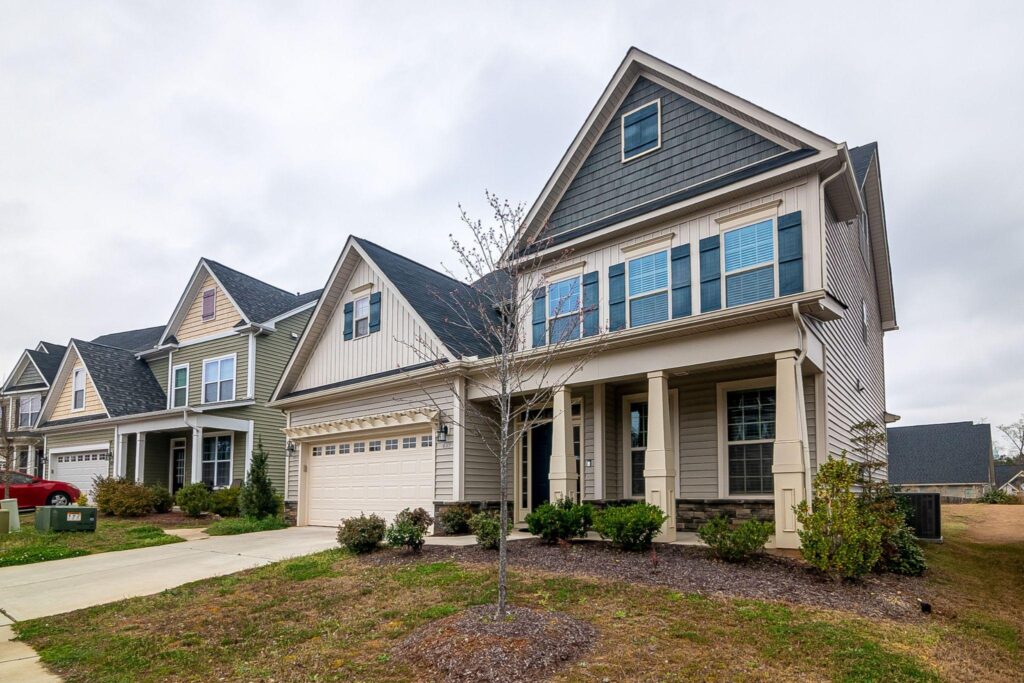
Building a home from scratch is one of those projects that almost always ends up costing more than the original estimate. Not because contractors are dishonest or because budgets are set carelessly, but because the process involves enough variables — weather delays, material price shifts, design changes, unforeseen site conditions — that surprises are essentially built into the undertaking. The question isn’t really whether something unexpected will happen. It’s whether the budget was built with enough margin to absorb it.
That said, overspending on a home build isn’t inevitable. The gap between a project that finishes close to budget and one that runs significantly over usually comes down to decisions made early — before the foundation is poured, before the framing crew shows up, sometimes before a lot has even been purchased.
The most practical guidance on how to cut home building costs doesn’t focus on cheap materials or corner-cutting. It focuses on the planning phase, where the decisions with the largest financial consequences get made with the least time pressure and the most room to adjust.
Get the Design Right Before Breaking Ground
Changes made on paper are cheap. Changes made during construction are expensive. A floor plan revision that takes an architect an afternoon to redraw costs a fraction of what it costs to move a wall that’s already framed, or to relocate plumbing that’s already roughed in.
Working through the design thoroughly — and living with it long enough to identify what doesn’t work before construction starts — is one of the highest-return investments in the entire project. Walkthroughs with an experienced builder during the design phase catch constructability issues that look fine on a drawing but create real complications in the field. That feedback loop, early and often, tends to prevent the mid-construction design changes that inflate budgets in ways that feel unavoidable once they’re happening.
Separate Wants From Needs at the Start
Every home build involves a list of features the owners want and a budget that can’t accommodate all of them. The builders who finish close to budget tend to be the ones who made that prioritization explicitly and early, rather than adding features incrementally during construction when the cost of each addition feels smaller than it actually is.
A useful exercise before finalizing the design is to categorize every feature into must-have, nice-to-have, and can-add-later. The must-haves are non-negotiable. The nice-to-haves compete for whatever budget remains after the essentials are priced. The can-add-laters acknowledge that some things — a finished basement, a deck, landscaping — can be done in a subsequent phase without meaningfully affecting the livability of the home at move-in.
That separation is harder to maintain once construction is underway and the home starts feeling real. Making it before the emotional investment is fully in place is when it’s actually achievable.
Understand Where the Money Actually Goes
A home build budget isn’t evenly distributed across every component. Foundation, framing, roofing, mechanical systems, and windows typically consume a disproportionate share. Finishes — flooring, cabinetry, countertops, fixtures — are where costs are most variable and where personal preference drives the widest range of outcomes.
Understanding that distribution allows for more strategic choices. Structural and mechanical decisions are harder to change later and tend to have more impact on long-term performance and maintenance costs than finish selections do. Spending more on insulation, windows, and HVAC efficiency may cost more upfront while reducing energy costs for as long as the home is occupied. Spending less on countertops that can be upgraded later is a different kind of tradeoff — one that preserves budget for things that are harder to revisit.
Get Multiple Bids and Understand What They Include
A single bid from a builder gives no context for whether the number is reasonable. Multiple bids do — not just for the bottom-line comparison, but for what each one includes and excludes. Two bids that look similar may cover very different scopes. One that looks higher may include contingencies and items the lower bid simply left out.
Bid apples-to-apples comparisons require a detailed scope of work that all bidders price against the same specifications. Vague scopes produce vague bids that become the source of disputes and change orders later. The time invested in developing a detailed scope before soliciting bids tends to pay for itself many times over.
Manage Change Orders Ruthlessly
Change orders are where home build budgets most commonly fall apart. Each individual change feels manageable — a different light fixture here, a window added there, a ceiling height change in one room. The cumulative effect of a dozen small decisions can add tens of thousands of dollars to a project that was already stretched.
The discipline required isn’t complicated in concept but is genuinely hard in practice. Every change order should be evaluated against the original priority list, not against the emotional momentum of a project that’s taking shape and starting to feel like a home. That distance — between what would be nice and what was planned — is what protects the budget when the pressure to approve just one more change is at its highest.


