
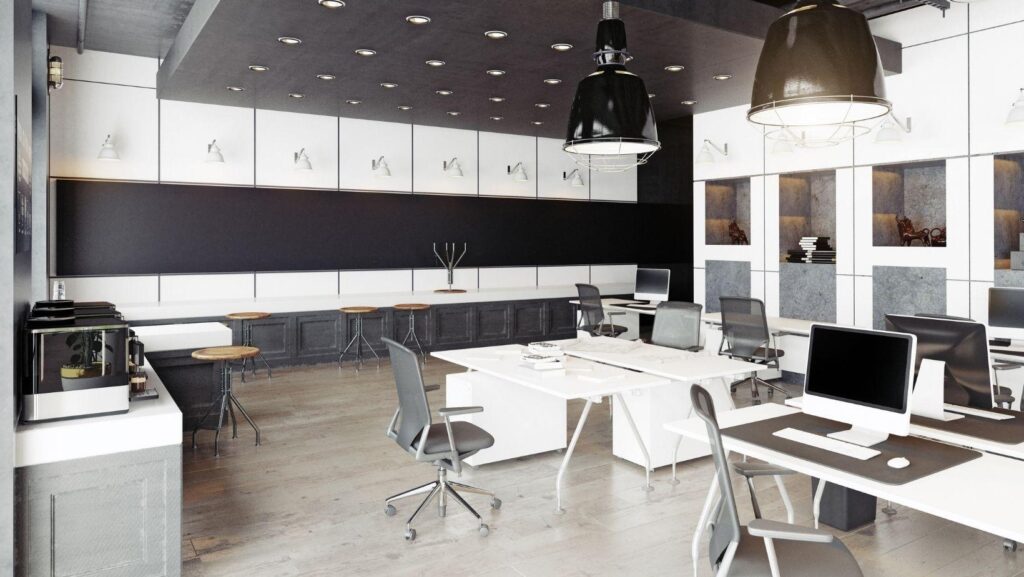
Most commercial property owners wait too long to repaint. The walls fade gradually, the scuffs accumulate one at a time, and by the time someone notices the space looks tired, customers and tenants have already formed an opinion. Knowing when to repaint is partly about aesthetics and partly about protecting an asset that costs far more to neglect than to maintain.
Here’s how to read the signs that your office, retail location, or commercial building is due for fresh paint.
Visible Fading and Discoloration
Paint loses its richness over time. Interior walls exposed to sunlight through large windows fade unevenly, leaving patches that no longer match the rest of the room. Fluorescent lighting in offices can also dull certain pigments faster than others. If you’ve noticed that your once-crisp neutral walls now read as grayish or yellowed, that’s oxidation and UV exposure doing their work.
Exterior surfaces fade even faster. A storefront that looked sharp three years ago may now appear washed out, and that dullness translates directly into how prospective customers perceive the quality of what’s inside.
Surface Damage and Wear
Cracks, peeling, chipping, and water stains are more than cosmetic problems. They often signal underlying issues like moisture intrusion or substrate movement. Peeling paint on a bathroom ceiling might mean a ventilation problem. Bubbling along an exterior wall could point to trapped water.
In high-traffic commercial environments, walls take a beating. Hallways, reception areas, and break rooms accumulate scuffs, handprints, and dents at a rate that residential spaces never approach. Once touch-ups stop blending in and start standing out, a full repaint usually makes more financial sense than ongoing spot repairs.
An Outdated or Inconsistent Brand Appearance
Color trends in commercial design shift, and a palette that felt current a decade ago can date a space instantly. More importantly, your paint should reinforce your brand rather than contradict it. A modern, design-forward company operating out of an office with builder-beige walls from two renovations ago sends a mixed message.
For retail and customer-facing businesses, color directly influences mood and behavior. If your interior no longer matches the experience you’re trying to create, repainting is one of the most cost-effective ways to realign the physical space with the brand.
Tenant Turnover and Lease Transitions
Property managers and commercial landlords face a recurring decision point every time a tenant moves out. A freshly painted unit shows better, leases faster, and often commands a higher rate. Prospective tenants walking through a space with marked-up walls and mismatched touch-ups mentally subtract from what they’re willing to pay.
Repainting between tenants also resets the maintenance baseline. It gives you a clean record of the unit’s condition and reduces disputes about wear at the end of the next lease. For multi-unit commercial properties, building a repaint into the turnover process tends to pay for itself through reduced vacancy periods.
Customer-Facing Wear in High-Visibility Areas
Entrances, waiting rooms, checkout counters, and any zone where customers spend time deserve closer scrutiny than back-of-house areas. These spaces shape first impressions, and wear shows up fast where hands, carts, furniture, and foot traffic concentrate.
A medical office with chipped trim in the waiting room, a restaurant with grease-darkened walls near the kitchen pass, or a boutique with scuffed baseboards near the fitting rooms all communicate something the owner probably doesn’t intend. Customers rarely articulate why a place feels run-down, but they register it.
Exterior Weather Exposure
Commercial exteriors endure sun, rain, wind, temperature swings, and pollution year-round. In a climate with hot summers and the occasional severe storm, exterior coatings work hard to protect the building envelope underneath. When that protective layer breaks down, the materials beneath it become vulnerable to rot, rust, and moisture damage.
Look for chalking, where the surface leaves a powdery residue when you rub it, along with cracking, fading, and any spots where the coating has separated from the substrate. Addressing these early prevents far more expensive repairs to the underlying structure later.
Preparing to Lease or Sell
Few improvements offer a better return than fresh paint when you’re putting a commercial property on the market. Buyers and prospective tenants form judgments within seconds, and a clean, neutral, well-maintained interior signals that the rest of the building has likely been cared for too.
Repainting before listing also widens your pool of interested parties. A bold or unusual color scheme that suited the previous occupant can narrow appeal, while a thoughtfully chosen neutral palette lets people imagine their own use of the space. The cost of repainting is almost always recovered in faster transactions and stronger offers.
Working With a Local Professional
Commercial repainting carries logistical demands that residential jobs don’t. Work often has to happen after hours or in phases to avoid disrupting operations, surfaces need proper preparation to meet durability expectations, and the right products vary depending on whether you’re coating a warehouse, a medical suite, or a retail floor. This is where hiring an experienced painting company in Dallas business owners can rely on makes a measurable difference, since a qualified local provider understands regional climate demands, code requirements, and the scheduling realities of keeping a business running during the work.
A good provider will walk the property, assess surface conditions, recommend appropriate coatings, and give a realistic timeline. They’ll also handle the prep work that determines how long the result actually lasts, which is the part that separates a professional finish from a quick cosmetic fix.
Making the Call
There’s no single calendar rule for repainting commercial space, since usage, traffic, materials, and exposure all affect the timeline. Interior offices might go five to seven years between full repaints, high-traffic retail considerably less, and exteriors depend heavily on local conditions and the quality of the previous coating.
The practical approach is to inspect your property at least once a year with fresh eyes, paying attention to the areas your customers and tenants see first. Fading, damage, dated colors, and upcoming transitions all point toward the same conclusion. When you catch these signs early and act on them, you protect both the appearance and the underlying value of the property, and you avoid the larger costs that come from letting deterioration run its course.


