Hidden water damage rarely shows up as a dramatic flood. It shows up as small changes that repeat, then quietly weaken drywall, framing, and indoor air quality.
If you catch it early, you may handle a focused repair. However, if you miss it, you can end up replacing materials while the source keeps feeding the problem. In this article, we’ve outlined six common signs of hidden water damage that homeowners should not ignore.
1. Dampness that keeps coming back
If you keep wiping the same spot, assume there is a source behind it. Treat persistent moisture as a systems issue, not a surface stain. This is when you should contact professionals in water damage restoration in Portland, especially if you cannot trace the leak quickly.
Check for cool patches on drywall, damp baseboards, or flooring that feels slightly soft. Run your hand along plumbing access panels and around toilet bases. Then think behind the surface, supply lines, drains, exterior walls, and roof penetrations.
2. Paint and drywall that lose integrity
Bubbling paint, peeling, or drywall that dents too easily usually means moisture is trapped behind the finish. Pay close attention to ceilings below bathrooms, walls near tubs, laundry rooms, and window trim.
Stop repainting until you understand why the material is failing. If a ceiling is sagging, treat it as urgent; water can pool above drywall and drop suddenly.
3. Stains that expand or reappear
A yellow or brown ring is a footprint, not the whole story. The key question is whether it is stable. If a stain grows after rain, showers, or appliance use, you have a timing clue. Watch for patterns like:
-
A ceiling mark below a bathroom or HVAC line
-
A wall stain near an exterior corner or window
-
Discoloration that returns after you ‘seal’ or repaint
Be sure to take a photo with a date and a quick measurement. It helps you confirm whether the issue is active, and it reduces guesswork for repairs. If the stain is near a light fixture, shut the power off and get it checked.
4. Musty odor that spikes with humidity
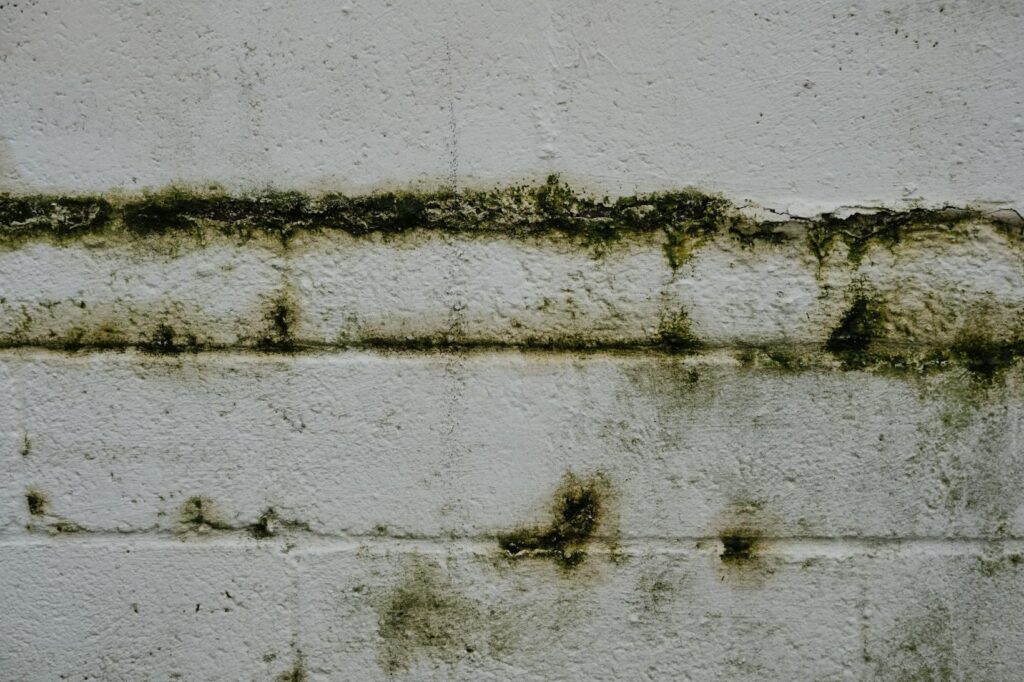
A musty smell often means damp materials that cannot dry. It may be strongest in closets, basements, under stairs, or behind furniture that blocks airflow. If the odor worsens after rain or on warm, humid days, the problem is most likely moisture, not ‘stale air.’
Be sure to ventilate briefly, then inspect for seepage or condensation. You should also check for wet insulation in exterior walls since it can hold water while the room looks normal.
5. Floors that warp, lift, or feel uneven
Water often travels under flooring and settles at seams and corners. Hardwood can cup, laminate can swell at joints, and tiles can loosen when the substrate softens. Do a quick walk-through:
-
Note soft or bouncy zones underfoot
-
Look for lifted edges near sinks, tubs, and dishwashers
-
Check for gaps at baseboards or door trim
If you find movement, skip cosmetic fixes. Your priority should be to stop the source and dry the structure before rot starts.
6. Higher water bills or low water pressure
Sometimes, hidden water damage starts with a plumbing leak you cannot see. A sudden rise in the water bill may point to a leaking pipe, running toilet, irrigation issue, or underground line problem. Low water pressure may also suggest a pipe problem.
Check fixtures, listen for running water, and review your bill history. If usage rises without a clear reason, do not wait for visible damage. The leak may already be affecting:
-
Walls or cabinets
-
Flooring or subflooring
-
Crawl spaces
-
Nearby insulation
Endnote
Hidden water damage is a compounding risk. It spreads quietly, it invites mold, and it can turn a small leak into a bigger repair. Treat early signals as evidence, track what changes, and escalate when the pattern persists, or the affected area grows.