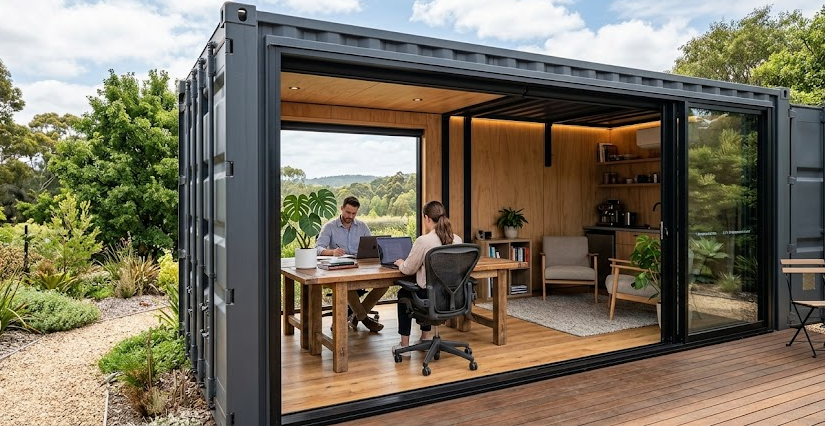
Office design is changing along with the way people work. Businesses increasingly need spaces that are flexible, cost-conscious, and fast to put into operation. That shift has created growing interest in alternative building formats that combine practicality with modern design.
Modern workspaces no longer have to begin with a conventional commercial shell. For many businesses, startups, remote teams, and property owners, container construction offers a practical path to a functional office with character, durability, and flexibility. Among the most adaptable options today are shipping container offices, which combine compact design with the potential for a highly efficient professional environment.
Why Shipping Containers Make Sense for Office Projects
A shipping container office is more than a design trend. It offers a practical solution for rising construction costs, changing workplace needs, and the demand for flexible building space. Built from durable steel, containers provide a strong base for office conversion.
For many business owners, the main advantages are speed and predictability. A container office can often be planned, modified, and installed faster than a traditional structure, making it useful for field offices, backyard studios, satellite workspaces, and on-site administrative units.
Shipping container offices also suit many environments, from commercial properties and farms to schools, event venues, and residential lots. They can function as compact private offices or be expanded into larger modular workspaces.
Starting with the Right Container
The success of the project depends heavily on choosing the right container at the beginning. A 20-foot container may be suitable for a private office, consultation room, or compact workspace for one or two people. A 40-foot container provides more usable floor area and usually allows better separation between work zones, storage, and meeting space.
Condition matters just as much as size. A used container may reduce initial costs, but it should be inspected carefully for corrosion, structural damage, floor wear, and prior modifications. A one-trip container often costs more, yet it usually provides a cleaner shell and fewer surprises during conversion. For an office project, that extra reliability can be worth the investment.
It is also important to decide early whether the office will remain a single unit or become part of a larger system. Some owners begin with one container and later add another for a conference room, reception area, restroom, or break zone. Planning for expansion from the start helps avoid layout problems later.
Designing a Functional Interior
A container office should not feel like a steel box with desks inside. Good design makes the space efficient, comfortable, and pleasant to work in. Since container dimensions are fixed, every square foot should serve a purpose.
The first step is to define how the office will be used. A sales office needs a different layout than an architect’s studio or a site management office. Some projects require built-in desks and storage. Others need open floor space, meeting capacity, or room for client-facing finishes.
A practical layout often includes several core elements:
- a clear entry sequence that feels welcoming rather than cramped
- enough desk space for daily work without overcrowding
- storage integrated into walls or under work surfaces
- logical placement of outlets, lighting, and data connections
- circulation space that allows people to move comfortably
Window placement is another major decision. Natural light can dramatically improve the feel of a container office, but too much glazing in the wrong location may create heat gain, glare, and reduced privacy. The best approach usually balances daylight, energy performance, and exterior views.
Insulation, Ventilation, and Comfort
This is where many container office ideas either succeed or fail. A steel container reacts quickly to outdoor temperatures, so comfort cannot be treated as an afterthought. Without proper insulation and ventilation, the office may become too hot in summer, too cold in winter, and prone to condensation problems year-round.
Insulation strategy should match the local climate and interior finish goals. Spray foam is popular because it adds thermal resistance while helping seal gaps. Rigid board systems and framed interior walls are also used, depending on budget and wall thickness preferences. In some projects, a combination of methods provides the best result.
Ventilation is equally important. A well-sealed office needs controlled airflow to maintain indoor air quality and reduce moisture buildup. Depending on the office size and usage, this may involve operable windows, mini-split systems, exhaust fans, or more advanced mechanical ventilation. Acoustic comfort should also be considered. Steel structures can carry noise differently than traditional buildings, so insulation, wall systems, and interior finishes should help reduce echo and outside sound intrusion.
Electrical, Lighting, and Technology Planning
An office built from a shipping container still has to perform like a professional workspace. That means electrical planning should begin well before interior finishes are installed. Power needs vary based on computers, printers, HVAC equipment, lighting, internet hardware, security systems, and any specialty equipment used in the space.
Lighting deserves special attention. A narrow office can feel dim or tunnel-like if lighting is poorly distributed. Layered lighting often works best: ambient ceiling fixtures for general brightness, task lighting for desks, and accent lighting to soften the interior and create a more polished look.
Technology planning should also include:
- outlet locations that align with actual workstation use
- data access and strong internet connectivity
- provisions for monitors, charging stations, and routers
- security features such as cameras, alarms, and controlled entry
- backup power options if the office will be used in remote areas
A container office that looks modern but lacks practical infrastructure quickly becomes frustrating to use. Smart planning prevents that.
Exterior Appearance and Site Integration
A shipping container office should fit its surroundings, especially when placed on a residential or mixed-use property. Exterior design can make the difference between a structure that feels temporary and one that feels intentional.
Many owners leave some of the corrugated steel visible to preserve the industrial look, while others choose added finishes to create a softer and more polished appearance. Common exterior improvements include:
- cladding or paint systems for a cleaner finished look
- awnings or pergolas for shade and visual balance
- decks and entry platforms for easier access
- landscaping to help the structure blend into the site
- steps, walkways, and railings for safety and convenience
The site itself must also be prepared correctly. Containers need a stable foundation system, which may involve piers, concrete pads, or other engineered supports depending on soil conditions and local codes. Drainage, access, and utility connections should be resolved before delivery. Even a well-designed office can perform poorly if the site work is rushed.Humanize 162 words
Compliance, Safety, and Long-Term Performance
Every container office project should be evaluated within the context of local building codes, zoning rules, and permit requirements. These may affect setbacks, occupancy classification, insulation levels, structural modifications, fire safety measures, and accessibility standards. Cutting large openings for doors and windows, for example, may require reinforcement to maintain structural integrity.
Long-term durability also depends on maintenance. Exterior coatings, roof protection, weather sealing, and regular inspections all help extend the office’s lifespan. Containers are tough, but office conversions depend on more than raw steel strength. They require thoughtful detailing to remain comfortable and efficient over time.
A well-built container workspace can offer real value when design decisions are driven by performance rather than novelty. Anyone considering this route should study proven approaches and review practical guidance on how to design and build a storage container office https://alittledelightful.com/how-to-design-and-build-a-storage-container-office/ before finalizing the plan. The strongest projects are the ones that treat the container as a building component, not as a shortcut that eliminates careful design.