Walk through any commercial property maintenance checklist, and you will find the usual items: HVAC filter changes, parking lot crack sealing, exterior lighting, fire suppression testing, and elevator certifications. These are visible, recurring, and hard to ignore. The roof is none of those things. It is out of sight, rarely scheduled for formal inspection unless something has already gone wrong, and easy to defer when a budget is tight.
That deferral is where the money goes. A commercial roof that receives consistent, structured maintenance can reach or exceed its designed service life. One that is ignored accumulates minor failures that compound quietly until they break through into the occupied space below, triggering emergency repair costs, interior damage claims, business interruption, and in some cases early roof replacement that costs ten times what a prevention program would have.
Why Roofs Get Skipped on Commercial Maintenance Plans
The pattern is consistent across property types. Building owners who are diligent about mechanical systems, parking infrastructure, and tenant-facing spaces frequently have no formal roof maintenance protocol at all. Three dynamics drive this.
First, commercial roofs are designed to be durable and largely self-sufficient. A new installation goes on, passes inspection, and then disappears from active thought. The design life on the warranty card creates an implicit expectation that nothing needs to happen for a decade or more. In reality, roof warranties require documented maintenance to remain valid, and minor issues that develop between installation and that warranty horizon will not fix themselves.
Second, roof problems are invisible until they are not. A failing HVAC unit announces itself through performance degradation and tenant complaints. A slow roof leak may migrate through the building assembly for months before showing up as a ceiling stain, by which point the damage is substantially worse than the initial entry point suggests. The absence of visible symptoms is mistaken for the absence of problems.
Third, roof maintenance sits in an organizational gap. It does not belong cleanly to the mechanical contractor, the janitorial crew, or the general property manager. Without clear ownership and a scheduled program, it simply does not happen. The guidance available through commercial roof maintenance from Cox Bros Roofing addresses exactly this gap by providing property owners with a structured, documented maintenance framework rather than leaving them to figure out the protocol independently.
What Deferred Maintenance Actually Costs
The financial case for proactive roof maintenance is not subtle. Industry data from roofing trade organizations consistently shows that a commercial roof receiving regular maintenance has a service life roughly 50% longer than a comparable roof that is ignored. On a 20-year roof, that gap is a decade of additional service, which deferred maintenance erodes into a 13 or 14-year actual lifespan before replacement is forced.
The cost math is straightforward. A commercial roof replacement on a mid-size building runs anywhere from $8 to $25 per square foot installed, depending on system type, region, and building complexity. A 20,000-square-foot roof replaced seven years early because deferred maintenance allowed minor failures to cascade into full system failure, representing a six-figure unplanned capital expenditure. The annual maintenance program that would have prevented it costs a fraction of that, typically between 1% and 3% of the roof’s replacement value per year.
Beyond replacement cost, interior damage is where deferred roof maintenance generates its most unpredictable expenses. Water intrusion into a commercial building does not stay in the ceiling. It migrates along structural members, saturates insulation, damages drywall and finishes, compromises electrical systems, and, in buildings with sensitive inventory or equipment, triggers losses that dwarf the cost of the roof repair that would have prevented them. Mold remediation following a chronic, slow leak is a separate cost category entirely and one that can render spaces unoccupiable for extended periods.
The Commercial Roof Maintenance Checklist
A structured maintenance program addresses the roof at regular intervals and after known stress events. The following checklist represents the minimum that building owners should be executing on any commercial property.
Twice-yearly inspections (spring and fall):
- Walk the entire roof surface and document the condition of the membrane or roofing material with photographs dated and geotagged where possible
- Inspect all field seams, laps, and transitions for lifting, separating, or bubbling
- Check all penetrations, including HVAC curbs, pipe stacks, conduit, skylights, and any equipment supports, for membrane integrity at the flashing terminations
- Inspect parapet walls, coping, and counterflashing for cracks, separation, or displaced material
- Clear all drains, scuppers, and gutters of debris and confirm flow
- Check for standing water or low spots that indicate drainage issues or membrane deflection
- Inspect roof edges, gravel stops, and perimeter metal for fastener back-out, corrosion, or separation
- Document any membrane repairs made since the last inspection
After significant weather events:
- Inspect the roof surface for hail impact, punctures, or membrane displacement following storms with winds above 60 mph or confirmed hail
- Clear any debris deposited by the storm, particularly branches and material that can puncture or abrade the membrane under foot traffic
- Check interior ceilings and walls in the 24 to 48 hours following a heavy rain event for new staining or wet spots that indicate active intrusion
After any rooftop work:
- Inspect the areas around any rooftop equipment that was serviced, replaced, or repositioned for membrane damage from foot traffic, dropped tools, or equipment movement
- Verify that any penetrations created or modified by mechanical, electrical, or communications contractors were properly flashed and sealed
- Document the date and nature of the work and the post-work condition of the membrane
The Penetration and Flashing Problem
If there is one category that generates a disproportionate share of commercial roof failures, it is penetrations and flashing. The field membrane on a well-installed commercial roof is a continuous, durable surface. Water gets in at the edges, terminations, and anywhere something punches through the plane of the roof.
Every HVAC unit, every pipe stack, every electrical conduit, every drain bowl, and every equipment support is a potential entry point. The flashing that seals these penetrations is subject to thermal cycling, UV degradation, settlement, and physical disturbance from maintenance crews who are servicing the equipment rather than thinking about the roof below it.
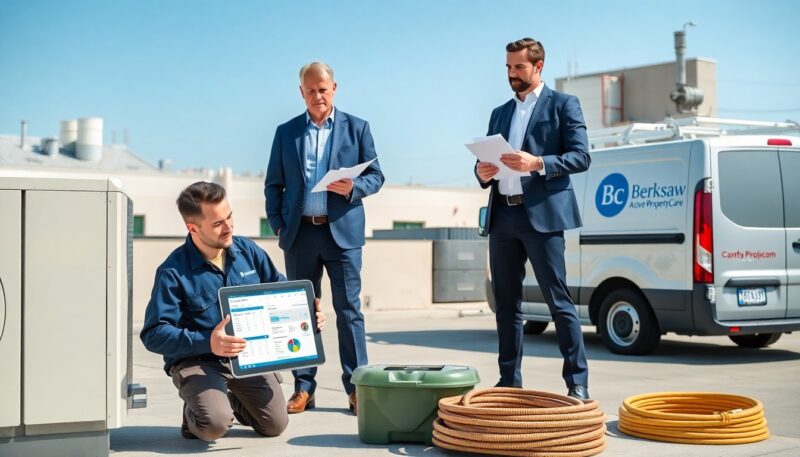
Mechanical contractors who service rooftop HVAC units are not roofing contractors. They are not looking at the membrane around the curb when they are diagnosing a refrigerant leak. They may step on flashing, drag equipment across the surface, or create a new conduit penetration without properly sealing it. Every rooftop service visit by any trade is a potential membrane event, and the only way to catch the resulting damage is a post-work inspection.
Building owners who allow rooftop access without a protocol for post-access inspection are systematically allowing damage to accumulate without detection. The fix is not complicated: require documentation of any rooftop access and schedule a visual inspection of the affected area within five business days of any visit.
Drainage Is Maintenance, Not an Afterthought
Standing water on a commercial roof is not a neutral condition. Membrane systems are designed to shed water, not contain it. Ponding water accelerates membrane degradation, adds structural load to the deck, and provides conditions where organic growth, freeze-thaw cycling, and seam stress can all operate simultaneously.
Drains clog. Scuppers collect leaves and debris. Gutters overflow and back up onto the roof surface. None of these is a design failure; they are maintenance events that are predictable and preventable. A drain that is cleared twice a year costs almost nothing. A drain that goes uncleared for three years and allows ponding water to compromise the membrane and the deck below it costs considerably more.
For flat or low-slope roofs in the Carolinas, where summer storms can deposit significant rainfall in short periods, drainage maintenance is particularly critical. The combination of high rainfall intensity and roofs that are not designed to drain quickly means that any obstruction translates directly to ponding.
Maintenance Documentation and Its Value
A roof maintenance program that is not documented is significantly less valuable than one that is. Documentation serves three purposes that building owners should care about.
First, it preserves warranty coverage. Most commercial roofing manufacturer warranties require evidence of regular professional inspection and maintenance to remain valid. A building owner who makes a warranty claim on a 15-year-old roof and cannot produce inspection records from years two through fourteen will find their claim denied or significantly discounted.
Second, documentation builds the case for insurance claims when interior damage occurs. An insurer defending a water intrusion claim will examine whether the building owner exercised reasonable care. Documented inspections showing that the roof was regularly assessed and that no defects were visible prior to the event support the claim. Absence of documentation supports the insurer’s argument that the damage resulted from the owner’s neglect rather than a covered event.
Third, documentation informs capital planning. A well-maintained inspection record showing the progression of membrane condition over the years gives building owners and asset managers a data-based picture of remaining roof life rather than a guess. That translates directly into more accurate reserve funding and fewer surprise capital calls.
The commercial roof is the building envelope’s first line of defense. Treating it as a background asset that requires no active management is the most predictable way to ensure it fails ahead of schedule and at maximum expense. A scheduled, documented maintenance program is not a sophisticated intervention. It is the basic standard of care that separates buildings that perform from buildings that cost.