Quick Answer
Most modern businesses fail their office cleaning checklist by treating it as a one-size-fits-all routine rather than a risk-based protocol. Common mistakes include ignoring high-touch surface rotation, skipping zone-specific frequencies, and confusing tidiness with actual sanitation. The result is a workspace that looks clean but carries measurable hygiene and compliance risks that accumulate quietly over time.
Introduction
Most facility managers and office administrators assume that having a crew on-site is the same as having a cleaning programme that works. The two are very different things. A mop hitting the same floor tiles every Tuesday morning is a habit, not a standard, and habits rarely hold up against the sanitation demands of a busy commercial environment.
The gap between appearance and actual hygiene is where most workplace illness clusters, compliance concerns, and facility complaints originate. Businesses benefit most from structured protocols built around commercial cleaning tips that account for surface type, occupancy patterns, and risk level rather than just visible dirt. Working with Time to Shine Cleaning professionals is the way organizations close that gap before it becomes a liability.
What Your Office Cleaning Checklist Is Probably Getting Wrong
Most businesses build their routine around what is visible rather than what is verifiable. Surfaces look wiped, floors look swept, and the space passes a casual visual inspection. The reality is that sanitation compliance operates on a different standard entirely, one that accounts for pathogen load, contact frequency, and material-specific cleaning requirements rather than surface appearance alone.
The most common structural flaw is treating the workspace as a single zone with uniform needs. A reception desk that handles dozens of visitor interactions per day carries a fundamentally different risk profile than a private office used by one person. When both surfaces receive the same product, the same dwell time, and the same weekly frequency, the protocol is not serving the higher-risk area adequately.
The Checklist Items Most Teams Skip
Businesses often focus their cleaning attention on obvious areas while consistently under-servicing the contact points that accumulate the most biological load. The following surfaces are statistically among the most contaminated in any commercial setting, yet they appear least often on a standard rotation:
- Light switches and wall plates near entry points and washrooms
- Keyboard surfaces and mouse devices at shared workstations
- Cabinet handles and drawer pulls in communal storage areas
- Elevator buttons and stairwell handrails in multi-floor facilities
- Telephone handsets at reception and shared desk positions
When building your checklist, categorize every item by contact frequency rather than by room. A surface touched by ten people daily needs daily attention, regardless of where it sits in the building.
Where Frequency Assumptions Break Down
One of the most persistent errors in workplace hygiene management is applying a weekly or bi-weekly frequency to surfaces that accumulate contamination daily. Office hygiene tips from building science research consistently point to a mismatch between perceived cleanliness and measured bacterial load, particularly in shared technology and food-adjacent zones.
In practice, even well-intentioned cleaning teams default to frequency schedules that were designed for low-traffic environments and then carried forward without review. Reassessing your schedule against actual occupancy data, not just room labels, is the first step toward a protocol that performs rather than one that simply exists on paper.
Commercial Tips Organized by Zone, Frequency, and Risk Level
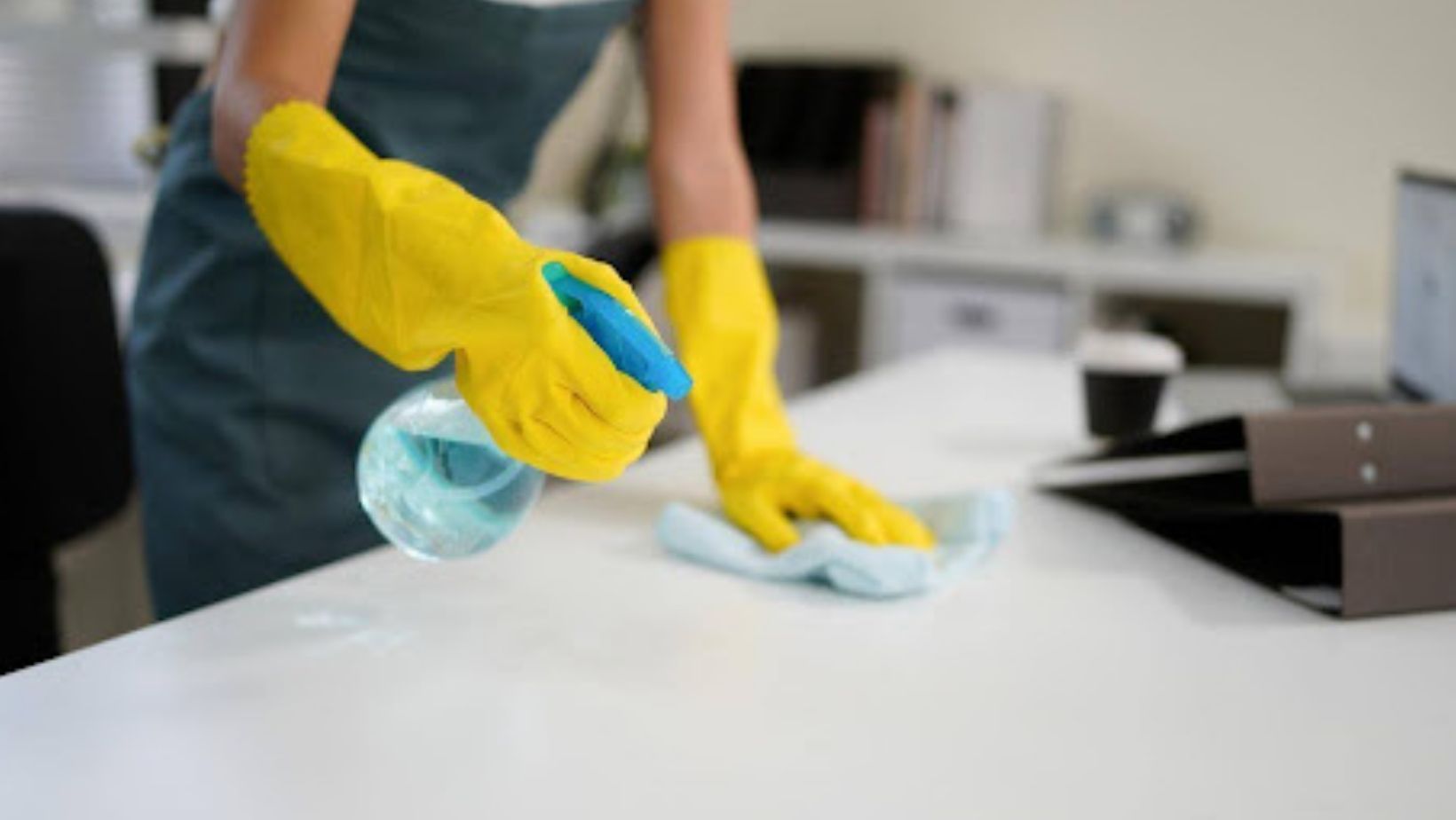
Understanding why a checklist fails is only half the work. The more actionable step is to restructure your approach around zone-based protocols, in which every area of a facility is assigned a risk tier, a product specification, and a documented frequency. This framework is the foundation of credible commercial cleaning standards and the clearest way to move a business from reactive tidying to proactive sanitation management.
High-Touch Surfaces and Daily Protocols
High-touch zones require daily attention using EPA-approved or Health Canada-recognized disinfectants with appropriate dwell times. Dwell time, meaning the period a product must remain wet on a surface to achieve its rated kill claim, is among the most ignored variables in commercial cleaning practice. Wiping a surface immediately after applying a disinfectant spray renders the product largely ineffective regardless of its laboratory rating.
The following table compares approaches by risk tier to illustrate how protocol depth should scale with contact frequency:
| Risk Tier | Zone Examples | Recommended Frequency | Product Standard |
| High | Washrooms, kitchens, entry points | Daily or twice daily | Hospital-grade disinfectant |
| Medium | Open-plan desks, boardrooms | 3 to 5 times per week | Commercial-grade sanitiser |
| Low | Private offices, storage rooms | Weekly | General-purpose cleaner |
| Seasonal | HVAC vents, ceiling fixtures | Quarterly | Specialized or contracted service |
Kitchen and Break Room Standards
Food-adjacent areas present a compounded risk because they combine organic residue accumulation with high occupancy turnover. Refrigerator handles, microwave touchpads, and coffee station surfaces are among the highest-contact points in any office yet they are routinely serviced on the same weekly schedule as low-traffic storage corridors.
Restrooms and Sanitation Compliance
Washroom servicing is where the gap between janitorial cleaning checklists and actual sanitation performance is most consequential. Beyond visible cleanliness, restroom protocols must account for cross-contamination pathways, meaning the sequence in which surfaces are cleaned matters as much as the products used. Cleaning a toilet fixture and then moving to the sink with the same cloth, even after rinsing, transfers pathogens rather than removing them.
How a Checklist Supports Long-Term Commercial Standards
Most organizations treat their cleaning documentation as a task reminder rather than an operational record. The distinction matters considerably. A janitorial cleaning checklist that functions purely as a to-do list tells you what was supposed to happen. One designed as an accountability document tells you what actually happened, when it happened, who performed it, and whether it met a measurable standard.
From Task List to Audit Trail
The structural upgrade from a basic checklist to a verifiable audit system requires three additions: date and time logging, staff sign-off fields, and periodic supervisory sign-off. These elements convert a passive document into an active compliance record.
Facilities operating under food handling regulations, childcare licensing, or medical office standards are often required to maintain exactly this kind of documentation, but the practice benefits any commercial environment regardless of regulatory obligation.
Scheduling Reviews That Actually Stick
A checklist written in January rarely reflects the operational reality of a facility by July. Staff changes, tenant additions, seasonal occupancy shifts, and new equipment all alter the surface contact map of a building over time. Scheduling a formal protocol review every quarter, rather than waiting for a complaint or a failed inspection, keeps the documentation aligned with actual conditions.
The review process should address the following at a minimum:
- Whether any new high-touch surfaces or zones have been added since the last update
- Whether product specifications still meet current Health Canada or regional regulatory standards
- Whether cleaning frequencies reflect current occupancy levels rather than original estimates
- Whether staff have received updated training on any new products or procedures introduced during the period
Hygiene as an Operational Standard
The businesses that maintain the strongest facility hygiene records are not necessarily those with the largest budgets. They are the ones who treat sanitation as a structured operational function rather than a background service. Applying documented office hygiene tips, maintaining zone-specific frequencies, and building accountability into every stage of the process transforms cleaning from an expense into a measurable asset.
Building a Programme That Actually Performs
Consistent facility hygiene is not a product of effort alone. It is the result of structured protocols, zone-specific frequencies, and documentation that holds a programme accountable over time. Businesses that audit their processes regularly, train staff on proper dwell times and cross-contamination prevention, and treat their office cleaning checklist as a living operational record will consistently outperform those relying on habit and visual inspection alone.