
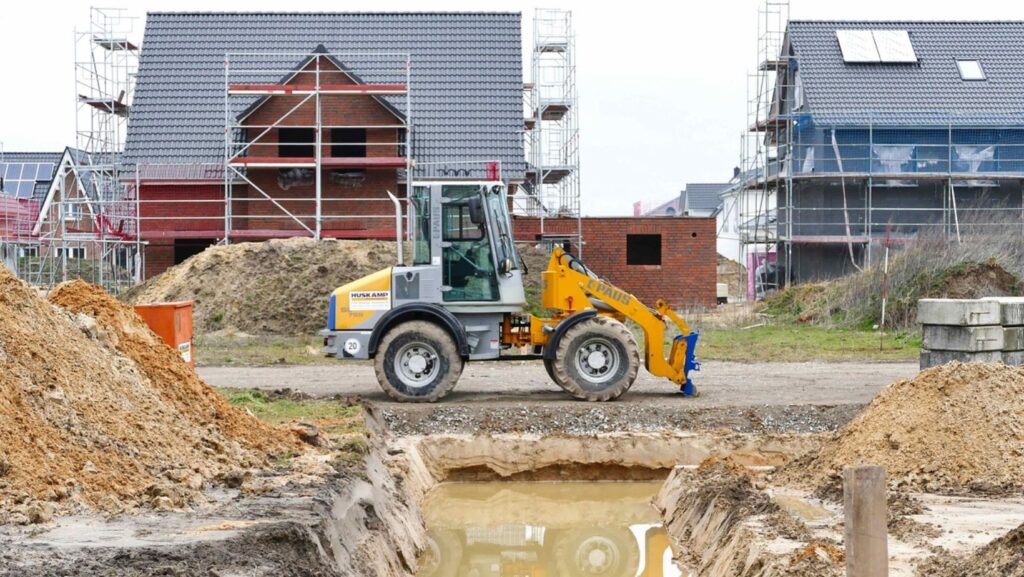
Want to get ahead of your competition in residential construction?
The construction equipment landscape is shifting under our feet. Builders who ignore these trends will quickly be left behind while those who embrace them will dominate their markets for years to come.
The good news is this… these trends aren’t difficult to understand or follow.
In this article, you’ll discover:
- Why Equipment Matters More Than Ever
- Electric Equipment Takes Center Stage
- Smart Technology and Telematics
- Compact Equipment Dominance
- The Rental Revolution
- What This Means For Builders
Why Equipment Matters More Than Ever
The residential construction market is thriving right now. Projects are booming. With them comes demand for the right construction equipment.
Here’s the reality…
According to recent research by DataM Intelligence, the global construction equipment market is projected to grow from $171.98 billion in 2025 to $271.30 billion by 2032. A significant portion of this growth is being driven by residential construction projects.
The search is on for the right equipment for residential construction. Contractors are under increasing pressure to complete projects on time and within budget. The days of getting by with outdated equipment are long gone.
Equipment matters more than ever in residential construction for the simple reason that the equipment landscape is rapidly changing. Builders who are up to date with these changes will spend less money on equipment and earn more contracts.
Electric Equipment Takes Center Stage
This is the first trend to be aware of.
Electric construction equipment has already moved from a niche product to mainstream. The numbers speak for themselves…
The electric construction equipment market is expected to reach $70.33 billion by 2032, growing at a compound annual growth rate of 23.8% during this period. Residential construction will account for over 40% of this market.
Electric equipment makes sense for residential builders for a few reasons:
- Zero emissions allows work in noise-restricted areas
- Lower operating costs for fuel and maintenance
- Quieter operation keeps neighbors happy and complaint free
- Government incentives help offset high upfront costs
Electric excavators are leading the way in popularity right now. They currently make up nearly 39% of the entire electric equipment market. Mini electric excavators are becoming a popular choice for residential work where space is limited.
There is a catch…
Electric equipment costs more upfront. A typical electric mini excavator costs about $66,000 compared to a $26,000 diesel equivalent. That is a lot of money. For those using diesel machines, understanding the diesel fuel system is key to managing maintenance and operating costs.
The savings are in the operating costs later. Electric machines are cheaper to fuel and maintain. Savvy builders are doing the math and going electric.
Smart Technology and Telematics
Construction equipment is getting a lot smarter these days.

Telematics systems are rapidly becoming standard on new equipment. These systems allow contractors to track and monitor their equipment remotely in real time using IoT technologies. The data these systems can provide is revolutionizing construction equipment management.
Telematics systems deliver value in several ways:
- GPS tracking to quickly and easily see where machines are at any time
- Preventive maintenance alerts to avoid breakdowns
- Fuel monitoring to identify waste and reduce operating costs
- Usage data to improve project planning and equipment allocation
IoT and AI technology integration in equipment is becoming the new norm. Features like remote monitoring and predictive maintenance are moving from optional extras to standard requirements.
For residential contractors this means less down time and greater productivity. If a machine is due for service the system can alert the operator to get it fixed before it breaks down on site.
Pretty handy right?
Compact Equipment Dominance
Residential construction is a different animal.
Small lots. Tight access points. Working in close proximity to existing structures. These are just a few challenges that require equipment that can manoeuvre around in limited spaces.
Compact equipment is the perfect answer to these challenges. Mini excavators, compact wheel loaders, and skid-steer loaders are all experiencing explosive growth right now.
The global compact electric construction equipment market already reached a whopping $63.2 billion in 2024. The market is expected to grow to $196.1 billion by 2033 according to Allied Market Research.
Compact equipment is dominating residential construction for a number of reasons:
- Small size allows operation on tight job sites
- Low ground pressure for safe operation on lawns and landscaping
- Easy transport from one job site to another
- Versatility with the right attachments to perform multiple tasks
Compact equipment is also benefitting greatly from the electric revolution in construction machinery. Smaller electric machines can operate indoors, in basements, and in other confined spaces without exhaust fumes getting in the way.
Residential builders are loading up on compact equipment for good reasons.
The Rental Revolution
Not every builder needs to own their own equipment.
The construction equipment rental market was worth $129.2 billion in 2023. That’s set to increase to $189.4 billion by 2030 according to estimates by Markets and Markets.
Builders are rapidly shifting to rental and subscription based equipment access models.
Why is the rental market exploding?
- Reduced capital requirements keep cash flow free for other investments
- Access to new technology without long-term commitment
- Flexibility to scale up or down depending on project needs
- Lower maintenance burden with rental company taking care of it
Rental is making a lot of sense for smaller residential contractors. There is no need to lock up capital in equipment that sits unused in between projects.
Rental also makes it easy to test electric equipment without fully committing to it. Many builders are testing electric construction machinery through rental programs before buying their own.
What This Means For Builders
The future of residential construction equipment is crystal clear.
Electric power, smart technology, and compact design will dominate the market. Rental options will continue to expand rapidly. Builders that embrace these changes will have a significant advantage.
So what should forward-looking contractors be doing?
- Assess electric options for any project where noise and emissions are a consideration
- Invest in telematics technology to improve productivity and reduce downtime
- Consider compact equipment options for residential work with space constraints
- Explore rental programs to access newer technology with lower capital investment
- Plan ahead for the diesel to electric transition in coming 5 to 10 years
The equipment decisions builders make today will have a major impact on the long-term success of their businesses.
Wrapping It Up
Construction equipment is shifting rapidly in the residential market.
Electric is moving from novelty to necessity. Smart technology is becoming a requirement. Compact equipment perfectly suits residential projects needs. Rental options are offering new flexibility.
These trends are not predictions of the distant future. They are already here.
Builders who understand these trends and move to embrace them will complete more projects more efficiently. Win more bids, and build more profitable businesses.
The only question is how quickly builders are willing to make the transition.
The first step is to evaluate existing equipment needs against these emerging trends. The contractors who are decisive and act fastest will be the industry leaders in years to come.


