Quick Answer
Renovating a small kitchen doesn’t require knocking down walls or expanding your floor plan – it’s about working smarter with what you have. Clever storage choices like pull-out pantries, vertical shelving, and drawer dividers can dramatically boost usability. Light colours, reflective surfaces, and strategic lighting create the illusion of more space, while a well-planned workflow minimizes clutter. With thoughtful design and a few space-saving tricks, even the tiniest kitchen can feel open, organized, and highly functional.
Introduction
Imagine opening your kitchen cupboard only to have a cascade of mismatched containers spill out – or struggling to prep dinner because your counter vanishes under grocery bags. If this sounds familiar, you’re not alone. Many Canadian homeowners are rethinking how they use compact kitchens, not by adding square footage, but by reimagining every inch with purpose.
A successful small kitchen transformation starts with identifying pain points and matching them with smart, tailored solutions. Whether you’re fine-tuning your layout or starting from scratch, guidance from experienced professionals can make a significant difference. That’s why so many turn to a trusted local resource for a seamless process – like a well-executed kitchen renovation that balances aesthetics, efficiency, and long-term value.
The good news? You don’t need a major overhaul to see real impact. From magnetic knife strips to toe-kick drawers, today’s design innovations offer big functionality in small packages. In the sections ahead, we’ll walk through practical storage strategies, visual tricks, and layout principles that turn cramped kitchens into highly efficient – and even joyful – spaces.
Maximizing Every Inch: Smart Storage & Layout Strategies for Small Kitchens
When space is limited, every design decision must carry its weight. The goal isn’t just to fit more in – it’s to make daily tasks easier, reduce visual clutter, and create a sense of flow. Below are proven approaches for kitchen renovations Airdrie that blend practicality with modern design sensibilities, tailored for Canadian homes where square footage often comes at a premium.
Rethink Cabinetry: Go Tall, Go Deep, Go Custom
Standard cabinets waste valuable real estate. Instead, consider these upgrades:
- Floor-to-ceiling cabinets eliminate awkward gaps and add up to 20% more storage. Include shallow upper units (10 – 12 inches deep) for spices or pantry items to avoid “cabinet graveyards.”
- Pull-out shelves and drawers replace fixed shelves, letting you see and reach everything without playing Jenga with jars.
- Corner solutions like lazy Susans or swing-out carousels turn dead zones into high-efficiency storage.
Pro tip: Install drawers instead of doors for base cabinets – they’re easier to access and keep contents organized.
Leverage “Dead” Zones Most Kitchens Ignore
Small kitchens often have underused areas that, with minor modifications, become functional assets:
| Dead Zone | Smart Hack | Benefit |
| Under the sink | Slide-out bin system or adjustable caddy | Keeps cleaning supplies visible and contained |
| Inside cabinet doors | Adhesive hooks, spice racks, or memo boards | Adds storage without taking up internal space |
| Toe-kick area | Retractable shallow drawer (3 – 4″ deep) | Perfect for baking sheets, cutting boards, or foil rolls |
| Above fridge or stove | Slim floating shelves (6 – 8″ deep) | Holds cookbooks, oils, or decorative jars – just avoid clutter |
Optimize Workflow with the “Golden Triangle”
Even in tight quarters, maintain the classic kitchen work triangle:
Sink – Fridge – Stove
- Keep these three points within 4 – 9 feet of each other for efficient movement.
- In galley or single-wall kitchens, place two points on one side and the third opposite (e.g., sink and stove on one wall, fridge across).
- Use a narrow kitchen island (30 – 36″ wide) as a bridge if floor space allows – it can double as prep space and storage.
Choose Multi-Functional Fixtures
Every item should earn its keep:
- Drop-leaf countertops fold down when not in use but expand for meal prep.
- Bar-height peninsula with stools replaces a dining table in studio or condo kitchens.
- Appliances with dual roles, like a microwave-convection oven or fridge with built-in water filtration, reduce appliance clutter.
Declutter Through Design, Not Just Discipline
Instead of relying on willpower to stay tidy, design your kitchen to encourage order:
- Use uniform containers (glass or matte-finish bins) for dry goods – visual consistency makes mess less noticeable.
- Drawer dividers for utensils, tools, and gadgets prevent jumbled chaos.
- Magnetic strips for knives or spice tins free up counter and drawer space.
Beyond Storage: Finishes, Lighting, and Choosing the Right Help

Once your layout and storage plan are locked in, the next layer of successful Airdrie kitchen renovations involves thoughtful material choices, strategic lighting, and – when needed – the right professional support. These elements might seem secondary, but they profoundly affect how spacious, inviting, and durable your kitchen feels over time.
Finish Choices That Amplify Space
In compact kitchens, finishes do more than look pretty – they shape perception.
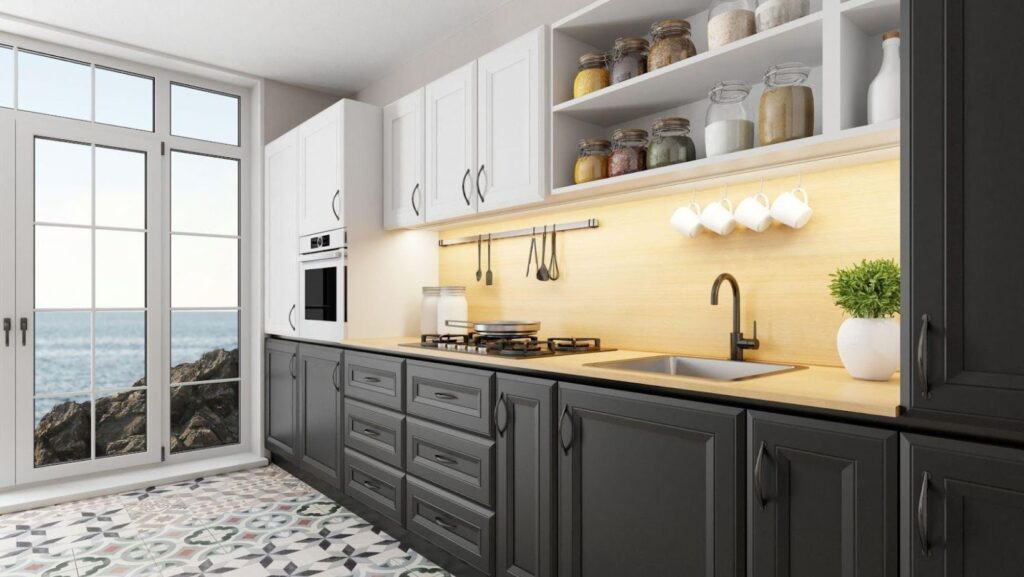
- Light, reflective surfaces like matte white lacquer cabinets, light oak, or pale grey painted millwork bounce light around and prevent visual heaviness.
- Backsplashes with subtle sheen (think honed marble-look porcelain or glass tile) add depth without overwhelming.
- Consistent flooring that flows into adjacent rooms eliminates visual “stops,” making the kitchen feel like part of a larger whole – ideal for open-concept condos or bungalows.
Avoid high-gloss finishes in high-use areas; they show every fingerprint and water spot, adding to the sense of clutter.
Layered Lighting for Function and Ambiance
Overhead pot lights alone create harsh shadows and flatten space. Instead, use a three-layer approach:
- Ambient lighting (recessed ceiling lights or a slim linear fixture) for general illumination.
- Task lighting under upper cabinets or inside drawers ensures safe chopping and reading labels.
- Accent lighting (LED strips inside glass-front cabinets or toe-kick lighting) adds warmth and dimension at night.
When to Bring in Professionals
Not every kitchen update requires a full team – but for structural changes, plumbing reroutes, or electrical upgrades, expertise matters. This is where kitchen remodel contractors become invaluable.
Look for contractors who:
- Offer 3D layout previews so you can “walk through” your new kitchen before demo begins
- Specialize in small-space design (not just luxury showpieces)
- Provide a fixed-price contract with a clear timeline
- Carry proper licensing and liability insurance
Ask to see past kitchen makeovers in homes similar to yours – especially in townhouses, older bungalows, or urban condos, where space constraints mirror your own.
Planning for Real Life
A beautiful render means little if your kitchen doesn’t handle daily realities. Consider:
- Pet or kid traffic? Skip open shelving – it collects dust and invites sticky fingers.
- Cook often? Prioritize a deep single-bowl sink over a double – it’s more versatile for large pots and sheet pans.
- Limited laundry access? Add a discreet pull-out rack under the counter for air-drying delicate dishes or herbs.
These nuanced touches ensure your kitchen isn’t just Instagram-ready – it’s life-ready.
Final Thoughts: Small Kitchens, Big Possibilities
A compact kitchen isn’t a limitation – it’s an invitation to design with greater intention. When every inch must earn its place, you end up with a space that’s not just efficient, but deeply personal. The best small kitchens aren’t defined by how much they hold, but by how well they support the rhythms of real life: morning coffee, weeknight stir-fries, late-night snacks, and shared meals with loved ones.
The beauty of today’s renovation landscape is that you don’t need a blank cheque or a contractor’s license to make meaningful change. Whether you’re refreshing hardware, rethinking your pantry, or planning a full kitchen remodel, the foundation is the same: start with how you actually live, not how a magazine says you should.