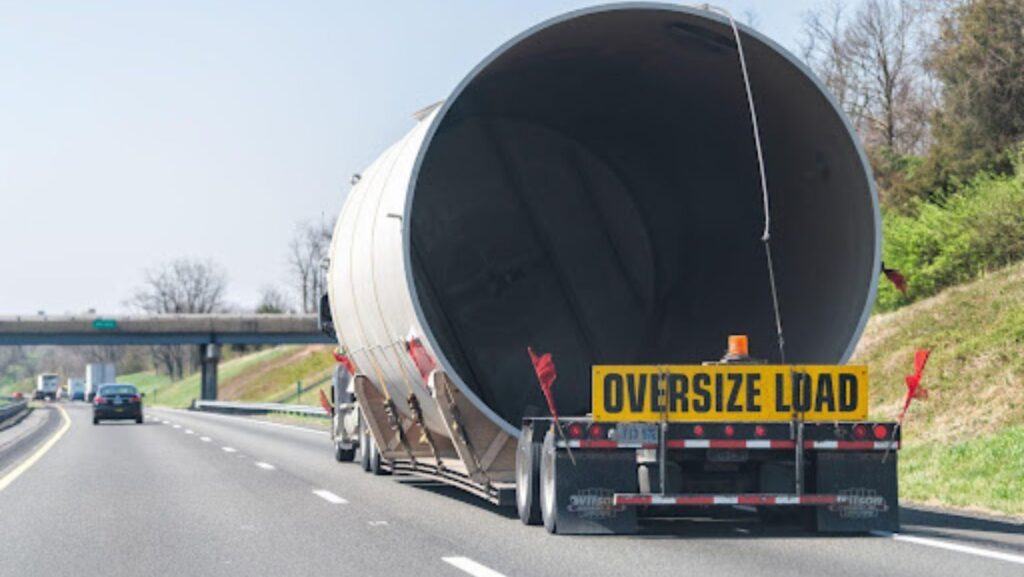
Transporting oversized loads involves far more than just a bigger truck – it demands advanced planning, specialized trailers, route engineering, and compliance with strict provincial and municipal regulations. Because these shipments exceed standard legal dimensions or weights and often can’t be broken down, every move requires custom coordination, from securing multi-jurisdictional permits to arranging pilot vehicles and utility line lifts. Success in oversized load transport hinges on expertise, precision, and proactive risk management to ensure cargo arrives safely and on schedule.
From wind energy components and construction cranes to refinery modules and bridge girders, oversized freight keeps Canada’s infrastructure and industries moving. Yet unlike standard shipments, these loads don’t fit neatly into conventional logistics frameworks. They challenge road clearances, weight limits, and scheduling norms – requiring a tailored approach that blends engineering insight with regulatory fluency.
Managing such complexity often means partnering with carriers who specialize in non-standard freight. That’s why many project managers and logistics coordinators rely on established Calgary trucking companies known for their heavy haul capabilities, safety records, and cross-provincial operational reach. In the world of oversized logistics, experience isn’t just an advantage – it’s a necessity.
Why Oversized Load Logistics Are More Complex Than Standard Freight
At first glance, oversized load logistics might seem like a simple matter of attaching a larger trailer to a more powerful tractor. In reality, it’s a multidimensional challenge that touches engineering, law, infrastructure, and real-time operations. Unlike standard freight – which follows predictable lanes, weight classes, and documentation protocols – hauling oversized loads introduces variables that can’t be managed with off-the-shelf solutions.
Consider this: a standard dry van trailer in Canada typically carries cargo within 2.6 metres in width and 13.7 metres in length. An oversized shipment might stretch beyond 30 metres, tower over 5 metres high, or weigh more than 150,000 kilograms. These dimensions immediately trigger a cascade of requirements:
- Regulatory hurdles: Each province sets its own rules for dimensions, weight allowances, travel times, and escort needs. A load moving from Manitoba to British Columbia may require three different permits and varying pilot vehicle configurations.
- Infrastructure constraints: Overpasses, power lines, narrow bridges, and even roadside signage can become obstacles. A route deemed “clear” on a map might be impassable in practice without utility coordination or temporary modifications.
- Operational unpredictability: Weather, road construction, or unexpected detours can derail even the best-laid plans. Unlike regular freight, you can’t simply reroute an oversized load through a residential side street.
This complexity is why oversized load trucking demands more than just strong equipment – it requires strategic foresight, contingency planning, and deep familiarity with regional nuances across Canada’s vast geography. The margin for error is slim, and the cost of miscalculation – whether financial, legal, or safety-related – can be significant.
The Full Journey of an Oversized Load: Key Stages and Requirements
Moving an oversized shipment isn’t a single task – it’s a carefully choreographed sequence of interdependent steps. From the moment a project is scoped to the final delivery confirmation, every phase must align with safety standards, legal mandates, and operational realities. Here’s how professionals manage the process from start to finish.
Route Survey and Feasibility Assessment
Before a permit is even requested, logistics teams conduct a detailed route analysis. This isn’t just about GPS directions – it’s about verifying every physical and regulatory detail along the proposed path. Key considerations include:
- Vertical clearances (e.g., bridges, power lines, signage)
- Horizontal constraints (e.g., tight curves, narrow lanes, median barriers)
- Road surface integrity (e.g., weight-bearing capacity of rural bridges)
- Municipal restrictions (e.g., no-oversize zones near schools or historic districts)
In some cases, a physical “drive survey” is conducted using a pilot vehicle equipped with measurement tools to simulate the load’s profile.
Permitting Across Canadian Jurisdictions
Permits are non-negotiable – and highly variable. Each province administers its own oversized load permitting system, with differences in:
- Maximum allowable dimensions without special approval
- Required documentation (engineering drawings, axle weight spreadsheets, insurance certificates)
- Processing timelines (some provinces require 10+ business days)
- Travel restrictions (e.g., daylight-only movement, holiday bans)
A single cross-country move may involve 4–6 separate permits, each with unique conditions. Missing one detail can result in costly delays or fines.
Equipment Selection and Load Securement
Not all trailers can handle abnormal loads. Common specialized equipment includes:
- Extendable flatbeds for extra-long cargo
- Lowboys and step-decks for tall or heavy machinery
- Multi-axle hydraulic trailers that distribute extreme weights
- Self-propelled modular transporters (SPMTs) for ultra-heavy industrial modules
Once loaded, securement follows Transport Canada’s Cargo Securement Standard, which mandates specific tie-down configurations based on cargo type, weight, and surface friction. Improper securement is a leading cause of roadside incidents in heavy haul trucking.
Escort and Pilot Vehicle Coordination
Depending on load dimensions, provincial rules may require one or more escort vehicles. These aren’t just for visibility – they actively manage traffic, communicate with oncoming drivers, and alert the hauler to unexpected hazards. Typical escort configurations include:
| Load Dimension | Typical Escort Requirement |
| Width > 3.85 m | Front and rear escorts |
| Length > 25 m | Rear escort (sometimes front) |
| Height > 4.88 m | Height pole vehicle + rear escort |
| Night moves or complex urban zones | Additional local police support |
Coordination between hauler and escorts is often managed via dedicated radio channels or real-time GPS tracking platforms.
Real-Time Monitoring and Contingency Planning
Even with perfect planning, surprises happen – a road closure, a fallen tree, or a sudden wind gust. That’s why modern heavy haul logistics increasingly rely on real-time telematics, weather APIs, and dynamic rerouting tools. Contingency plans might include:
- Pre-identified alternate routes
- On-call utility crews for emergency line lifts
- Mobile cranes staged at strategic waypoints for load adjustments
This proactive approach minimizes downtime and keeps projects on schedule – critical when every hour of delay costs thousands.
Pro Tips for Shippers Managing Oversized Freight
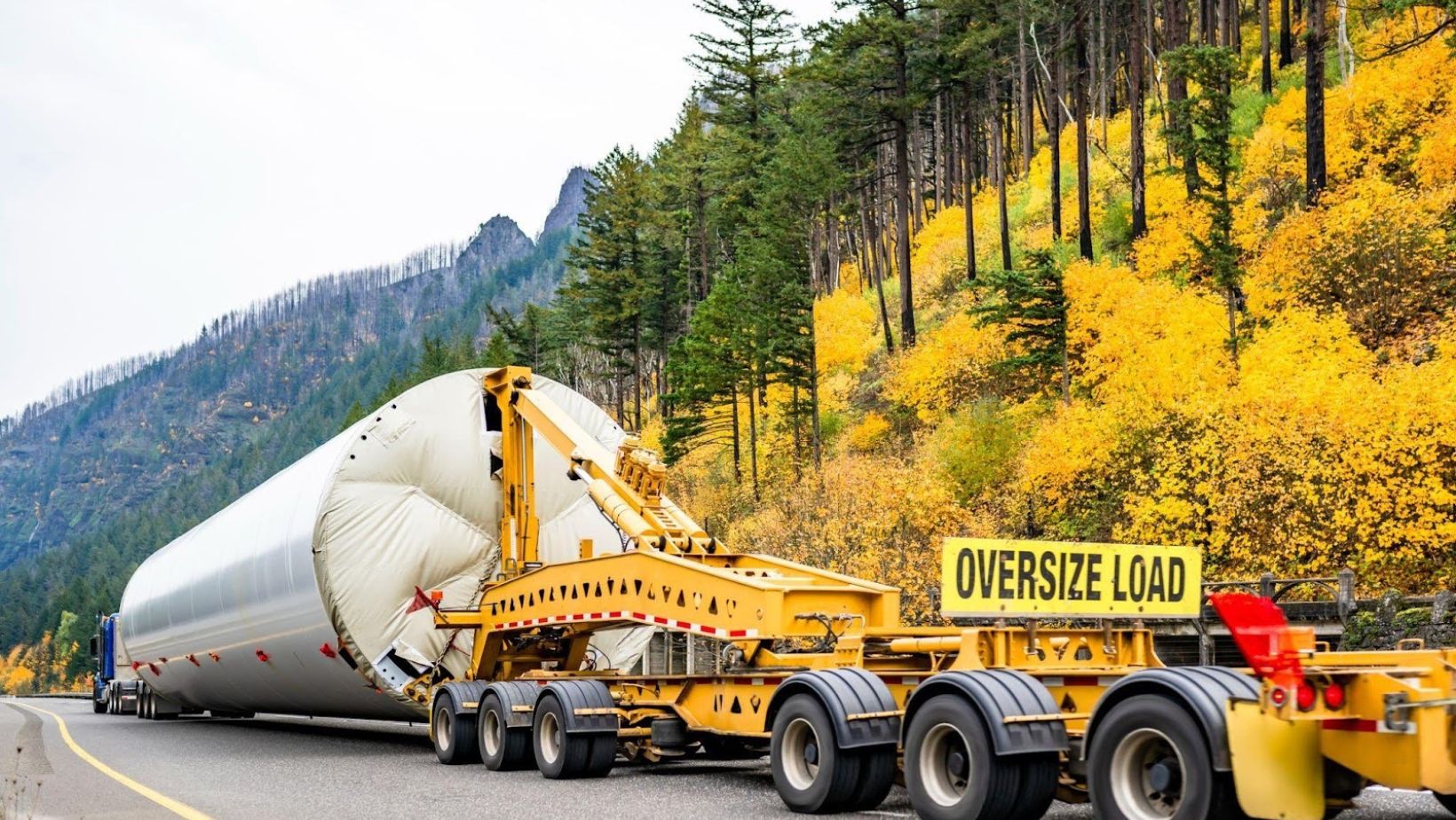
If you’re coordinating an oversized shipment for the first time – or even the fifth – it pays to think like a logistics planner. The difference between a smooth delivery and a costly delay often comes down to preparation and communication. Here are practical, field-tested tips to help you navigate the process with confidence:
Start Early – Much Earlier Than You Think
Permitting alone can take 2–3 weeks in some provinces. Add time for route surveys, utility coordination, and equipment availability, and you’re looking at a 4–6 week lead time for complex moves. Don’t wait until the project deadline looms.
Provide Complete, Accurate Load Specs
Dimensions, weight distribution, center of gravity, and lifting points aren’t optional details – they’re essential for trailer selection and securement planning. A vague description like “large generator” isn’t enough; share engineering drawings if possible.
Clarify Access At The Origin And Destination
Many delays happen not on the highway, but in the final 100 metres. Confirm that your site has adequate turning radius, ground stability, and overhead clearance. Will the load need to be offloaded at night? Is there room for escort vehicles to stage?
Ask About Carrier’s Experience With Similar Cargo
Not all operators who offer oversized load transport have handled your type of freight. A company experienced with wind blades may not be suited for refinery modules. Request case examples or references for comparable projects.
Build Buffer Time Into Your Schedule
Weather, permit revisions, or last-minute roadwork can push timelines. A flexible window reduces pressure and allows for safer, more compliant execution.
Understand Your Liability And Insurance Coverage
Standard cargo insurance often excludes oversized or non-standard loads. Verify that your policy – or the carrier’s – covers the full replacement value and includes provisions for delays or damage during specialized handling.
These aren’t just logistical niceties – they’re risk-mitigation strategies. In the world of oversized freight, foresight is the closest thing to a guarantee.
Final Thoughts: Why Expertise Matters in Oversized Transport
At its core, moving oversized freight isn’t just about horsepower or trailer size – it’s about judgment. The same load that rolls smoothly through Saskatchewan might stall for days in Quebec if local regulations or infrastructure nuances aren’t respected. That’s why oversized load trucking demands more than equipment; it requires institutional knowledge, adaptability, and a culture of safety that can’t be improvised.