Your backyard should be a place where children can invent games, dogs can burn off energy, and the whole family can spend time together. The challenge is creating an outdoor space that can handle muddy paws, active play, changing weather, and everyday wear without becoming difficult to maintain.
With thoughtful landscaping and a few practical design choices, you can build a backyard that looks great while supporting the way your family actually lives. Here are the key elements that make an outdoor space enjoyable, safe, and functional for both kids and dogs.
Design Your Yard Around How Your Family Uses It
The best family-friendly landscapes start with a simple question: How will the space be used every day?
Instead of treating the backyard as one large open area, divide it into zones that support different activities. One section might serve as a play area for children, while another gives your dog plenty of room to run and chase a ball. You can also create a quiet corner for outdoor dining, gardening, or relaxing after work.
If you’re preparing your home for a new puppy or expanding your pet-friendly space, plan your yard before your newest family member arrives. You can find happy puppies ready for loving homes when you shop at honestpet.com. They offer guidance on welcoming a new puppy home and preparing your home and outdoor environment.
As you design your layout, think about movement. Children and dogs naturally create paths through the yard. Installing stepping stones or paved walkways along those routes protects your lawn and reduces muddy areas after rain.
A secure fence should also be part of the plan. Check for loose boards, damaged sections, or gaps beneath gates that curious dogs might squeeze through. A well-maintained fence creates peace of mind while allowing everyone to enjoy the backyard safely.
Choose Landscaping That Can Stand Up to Daily Use
Beautiful landscaping should work with family life instead of against it. Large stretches of healthy lawn remain one of the most practical choices for active households. They provide room for football games, fetch, tag, or simply rolling around on the grass. If your lawn receives heavy traffic, consider overseeding worn patches regularly and rotating play areas to reduce excessive wear.
Raised garden beds offer another practical solution. They protect flowers, herbs, and vegetables from accidental trampling while making gardening more comfortable for adults. Children also enjoy helping water plants or harvest vegetables when garden spaces remain easy to reach.
When selecting plants, avoid varieties with sharp thorns or toxic berries if children and dogs regularly use the yard. Instead, focus on sturdy shrubs and hardy perennials that tolerate occasional bumps from energetic play.
Mulch also deserves careful consideration. Larger wood chips generally stay in place better than lightweight materials that scatter across the lawn. Around play equipment, softer surfaces help cushion falls while reducing muddy patches during wet weather.
Create Spaces That Encourage Outdoor Play
Children often need open-ended spaces rather than complicated equipment. A simple grassy area supports games, obstacle courses, picnics, and imaginative adventures. Adding stepping logs, balance beams, or natural climbing features creates opportunities for active play without overwhelming the landscape.
Dogs also benefit from features that provide physical and mental stimulation. Wide paths encourage exploration, while gentle hills, logs, or designated digging areas give them healthy outlets for natural behaviours.
Fresh water should always be available outdoors, especially during warm weather. A shaded water station keeps both children and pets comfortable during longer play sessions.
Storage matters too. Outdoor benches with built-in storage make it easy to keep footballs, dog toys, garden tools, and children’s outdoor games neatly organised. When everything has a designated place, tidying the yard becomes much quicker.
Make Comfort and Safety a Priority
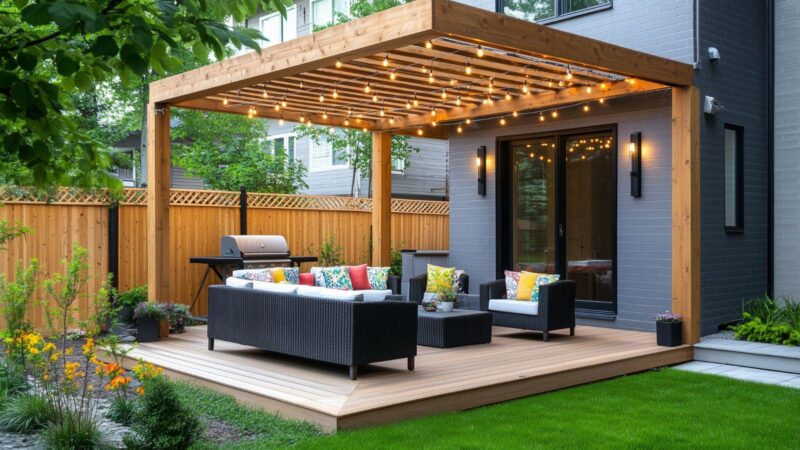
Shade plays a major role during the warmer months. Mature trees naturally cool the landscape while adding character and privacy. If your yard lacks established trees, pergolas, shade sails, or umbrellas create comfortable gathering spaces where adults can supervise children and pets without standing in direct sunlight.
Good drainage also makes a noticeable difference. Areas that collect standing water quickly turn into muddy patches that damage lawns and create slippery conditions. Installing proper drainage or improving the grading keeps the yard usable after heavy rain.
Lighting extends the time your family can enjoy the backyard. Low-level pathway lights improve visibility without creating harsh glare. They also make evening trips outside with the dog much safer.
Inspect outdoor play equipment regularly for loose bolts, splintered wood, or worn ropes. Likewise, check fencing, gates, and garden edging throughout the year. Small repairs completed early often prevent larger problems later.
Keep Maintenance Simple and Sustainable
Choose landscaping materials that suit your lifestyle rather than those that require constant upkeep. Wide planting beds reduce the amount of lawn that needs mowing, while mulch helps suppress weeds and retain soil moisture.
Establish simple routines for caring for the yard. Pick up pet waste daily, sweep paved areas regularly, and trim shrubs before they overgrow walkways. These small jobs prevent larger maintenance issues from developing.
Children can also become part of the routine. Watering plants, collecting fallen sticks, or helping organise outdoor toys teaches responsibility while encouraging them to take pride in their outdoor space.
Dogs benefit from consistency as well. Keeping designated potty areas clean and maintaining clear walking paths helps establish routines that protect your lawn and landscaping.
Final Thoughts
The best family backyards combine practical landscaping with thoughtful design. They provide safe places for children to play, open areas for dogs to exercise, and comfortable spaces for the whole family to spend time together. By dividing your yard into functional zones, choosing durable landscaping materials, maintaining safe boundaries, and planning for everyday use, you can create an outdoor space that remains attractive and enjoyable for years to come.
A backyard designed around real family life quickly becomes one of the most-used parts of any home, giving children room to make memories, dogs space to thrive, and everyone another reason to spend more time outdoors.