Of all the fixtures in a bathroom, the shower takes the most daily punishment — and its design quietly shapes everything from morning routines to monthly utility bills to the cost of repairs years down the road. A well-thought-out shower can shave time off a hectic morning, put a real dent in water consumption, and spare you from the kind of expensive renovation work that comes from getting it wrong the first time.
The Case for Thoughtful Shower Planning
Understanding the Core Components of a Shower System
Browsing curated solutions like sproos! shower kits is a useful way to understand how all the components — valves, heads, hoses, and controls — function as an integrated system. This guide offers practical, non-branded advice for planning a shower that is efficient, comfortable, and built to last. As always, follow local plumbing codes and consult a licensed professional whenever you’re uncertain.
A modern shower is far more than a head and a handle. The main elements include the shower valve and controls (thermostatic vs. pressure-balanced), the showerhead type (fixed, handheld, rain, or body jets), supply lines, drainage, and the enclosure itself. These parts function as a system — the interplay between pressure, temperature stability, and flow rate determines both comfort and efficiency. A common misconception is that higher flow automatically means a better shower; in reality, mismatched components tend to cause leaks, inconsistent temperatures, and frustrating performance. A pressure-balanced valve, for instance, compensates for sudden fluctuations in supply pressure to prevent scalding — a meaningful distinction from a basic single-handle setup that many homeowners overlook.
Planning for Water Efficiency Without Sacrificing Comfort
Showers account for a significant share of household water and energy use. Modern aerating or laminar-flow designs can deliver a satisfying experience at lower flow rates, largely putting to rest the myth that water-saving heads always feel underwhelming. When selecting fixtures, keep these factors in mind:
- Flow rate ratings and whether they realistically suit your household’s actual needs
- Compatibility between the valve and showerhead, particularly around pressure and flow restrictions
- Spray patterns that work for every user — a family with long hair, for example, may need broader coverage than a compact jet provides
Where possible, verify product performance through independent certifications rather than relying on marketing claims, and favor proven, timeless performance over whatever happens to be trending.
Designing for Accessibility, Safety, and Long-Term Use
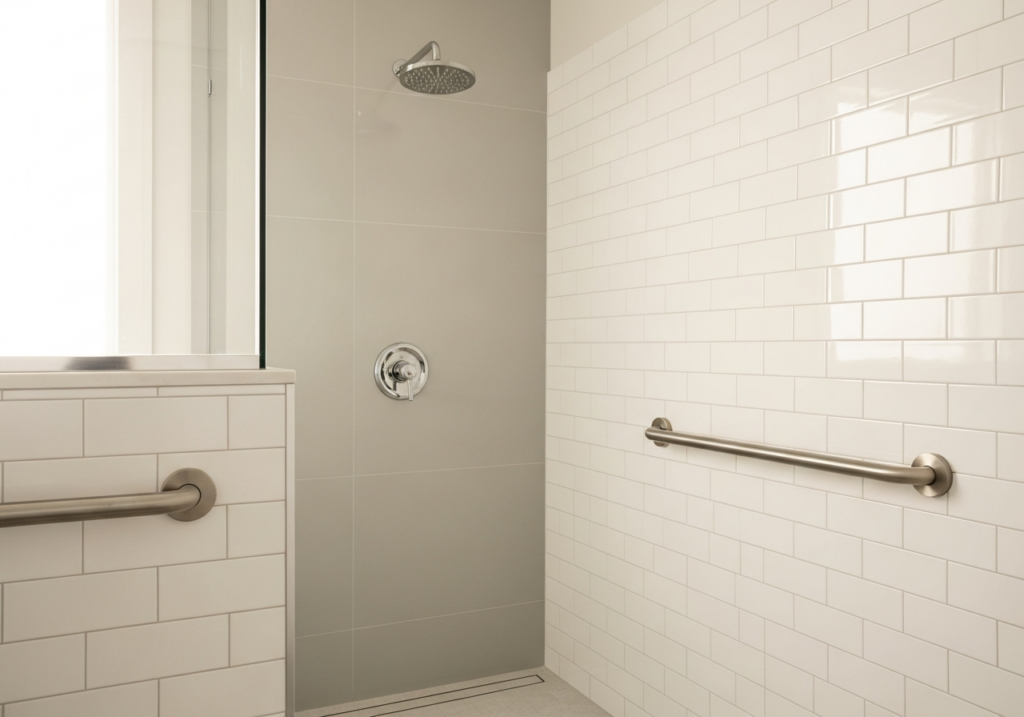
Positioning controls where they can be reached from outside the spray zone prevents scalding during temperature adjustment — a small detail that makes a big difference. Thermostatic or anti-scald valves are especially valuable in households with young children or older adults. Slip-resistant flooring, a properly sloped drain, and grab bars anchored into reinforced walls all reduce the risk of injury. Curbless or low-threshold entries improve access for wheelchair users and anyone with limited mobility. An adjustable handheld showerhead on a slide bar accommodates users of varying heights — and, as a practical bonus, makes cleaning the enclosure considerably easier.
Key Takeaway: Plan your shower so it’s safe and comfortable for everyone now — and adaptable for the future.
Choosing Materials and Finishes That Stand the Test of Time
Tile, solid surface panels, acrylic units, and natural stone each come with their own trade-offs in durability, ease of cleaning, and repairability. What matters most beneath any surface, though, is waterproofing — membranes, backer boards, and sealants applied correctly at the time of installation. Hidden water infiltration is one of the most common and costly shower failures, often developing silently behind walls for months before anyone notices. For hardware, choose corrosion-resistant finishes suited to your local water quality; hard-water areas in particular benefit from surfaces that resist mineral buildup and spotting. Neutral, timeless palettes also tend to outlast trend-driven choices by years, which is worth considering when you’re investing in something meant to last.
Practical Layout Tips for Different Bathroom Sizes
In compact spaces, corner or neo-angle showers with sliding doors preserve clearance, while clear glass and lighter finishes create a greater sense of openness. Recessed niches replace bulky shelving without crowding the standing area. In larger bathrooms, zoned shower areas — one for quick daily use, another for rain or body sprays — offer genuine flexibility. That said, multiple outlets demand careful attention to water pressure and valve capacity; without it, the experience can quickly become confusing or even unsafe for guests and children.
Balancing DIY Ambitions with Professional Help
Many homeowners can confidently handle fixture selection, accessory installation, and cosmetic updates like re-caulking. Even so, it’s worth calling in a licensed professional if your project involves any of the following:
- Moving or modifying supply lines or drain locations
- Waterproofing the shower pan or walls
- Electrical work such as lighting or exhaust fans
- Structural changes to walls or flooring
Cutting corners on waterproofing or plumbing can lead to mold, persistent leaks, or structural damage — repairs that routinely cost far more than the original project would have.
Bringing It All Together
A successful shower design balances comfort, water efficiency, safety, durability, and accessibility — not aesthetics alone. Thinking in terms of a complete system, from valve to enclosure to waterproofing, reduces unwelcome surprises and improves daily use for years to come. Start by listing your household’s priorities, sketch a rough layout, and consult reputable plumbing, building science, and water-efficiency resources before purchasing anything or breaking ground. Verify the compatibility of all components regardless of brand, and never compromise on safety or code compliance in the name of convenience.