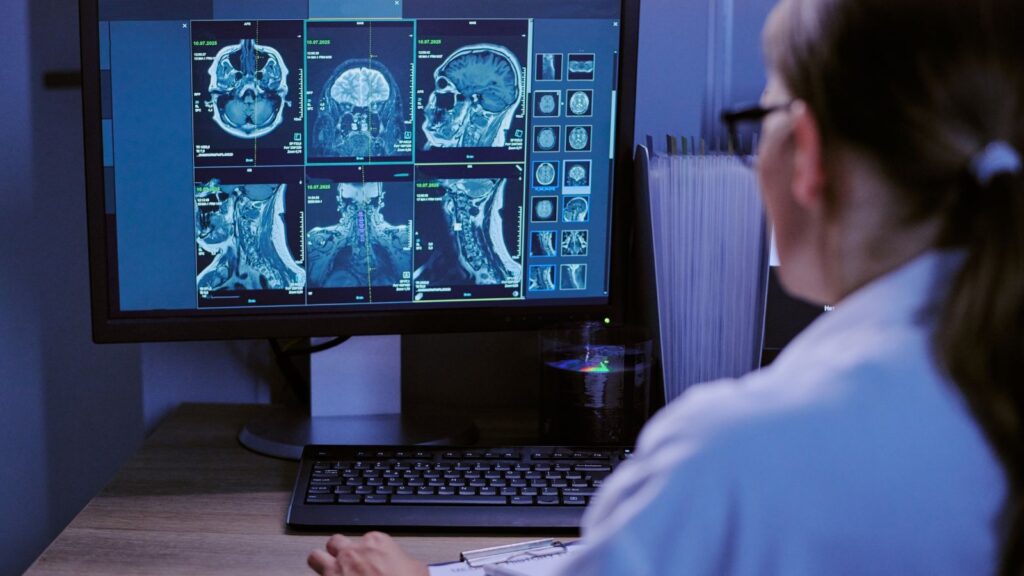
Advances in digital healthcare have made access to specialist medical opinions easier than ever. Today, patients can arrange an MRI scan online, securely share their imaging files and receive a professional interpretation without visiting a radiology office in person. While the technology has evolved, the principles of medical evaluation remain the same – expert analysis by a qualified radiologist is always essential.
1. Booking an MRI Scan Online – What It Means
Booking an MRI scan online usually refers to arranging either the imaging examination itself or the interpretation of already completed scans through a digital platform.
If the scan has not yet been performed, the online booking process allows you to select the body area to be examined, choose a convenient date and receive preparation instructions electronically.
If you already have your MRI images, online services often allow you to request a professional review without repeating the test. This option is particularly useful when seeking clarification or a second opinion.
2. How to Share MRI Images Securely
MRI scans are typically saved in DICOM format on a CD, USB drive or hospital portal. To obtain remote interpretation, these files must be uploaded through a secure, encrypted system.
The standard process includes:
- Creating an online account or completing a request form
- Uploading MRI image files in the required format
- Providing brief medical information such as symptoms or prior diagnoses
- Confirming consent and data protection terms
Secure platforms comply with medical data protection regulations, ensuring that sensitive health information remains confidential.
3. What Happens During Remote MRI Interpretation
Once the files are uploaded, a radiologist reviews all image sequences carefully. MRI studies often contain hundreds of slices and multiple imaging techniques that highlight different tissue characteristics.
The radiologist evaluates:
- Anatomical structures and symmetry
- Signal intensity patterns across sequences
- Possible signs of inflammation, degeneration or other abnormalities
- Correlation with the clinical information provided
The result is a structured written report prepared according to professional radiology standards.
4. Receiving and Using Your MRI Report
After the interpretation is completed, patients typically receive a digital PDF report. This document can be downloaded, printed or forwarded to a treating physician.
It is important to remember that even when using an MRI scan online service, the final step is always a consultation with a doctor. The radiology report supports diagnosis, but treatment decisions are made by the physician who understands your full medical history.
5. Advantages of MRI Scan Online Services
Remote MRI services provide several practical benefits:
- Faster access to specialist interpretation
- Convenient submission without travel
- Opportunity for a second opinion
- Clear, structured medical documentation
At the same time, online services do not replace medical supervision. They enhance access to expert evaluation while maintaining the essential role of both the radiologist and the treating doctor.
6. When Is an Online MRI Interpretation Especially Useful?
An online MRI interpretation can be particularly valuable in specific situations. It is often chosen by patients who face long waiting times for radiology reports, who need clarification before an upcoming specialist appointment, or who would like confirmation of previous findings. It may also be helpful for individuals living abroad or in areas with limited access to subspecialty radiologists.
Remote interpretation does not change the medical standards of evaluation. The same diagnostic principles apply whether the radiologist reviews the images onsite or through a secure digital platform. The difference lies only in the method of file transfer and communication.
7. Data Protection and Medical Confidentiality
Sharing medical imaging files online naturally raises questions about privacy. Professional MRI scan online services use encrypted systems designed to protect sensitive health information. Uploaded files are accessible only to authorized medical professionals involved in the interpretation process.
Before submitting images, patients are usually asked to confirm informed consent and accept data protection terms. This ensures that personal and medical data are processed in accordance with healthcare regulations and confidentiality standards. Secure digital handling of MRI files allows patients to benefit from remote expertise without compromising privacy.