Ever walked into a rental unit and felt that faint “off” hum in the air—just before the system starts rattling or the temperature drifts? It’s subtle. But if you manage properties, you know that hearing means something’s amiss.
The thing is: winterizing your HVAC system doesn’t have to spiral into a big-budget mess. With a few savvy checks, you can keep tenants comfortable and your costs in check.
In this article, we’ll cover the skipped basics, the money-saving maintenance you’ll actually use, when to invest, a realistic seasonal rhythm, and the one thing people rarely talk about.
The Part Most People Skip (But You Shouldn’t)
Let’s get this out early: most winter HVAC issues could’ve been avoided with basic upkeep. It’s weird — we humans procrastinate on the easiest stuff. Filter changes. Clearing vents. Listening when the system starts making that “I’m tired” noise.
Start With the Airflow — Always
A dirty filter feels like one of those small chores we push off because “it probably still works.” And it does… until it doesn’t.
The US Department of Energy notes that replacing clogged filters can reduce energy consumption by 5–15%, which is the kind of saving you actually feel over a season. One filter. A few dollars. Instant performance bump. Kind of makes you wonder why so many people skip it.
Rethink Your Heat Pump Before It Breaks
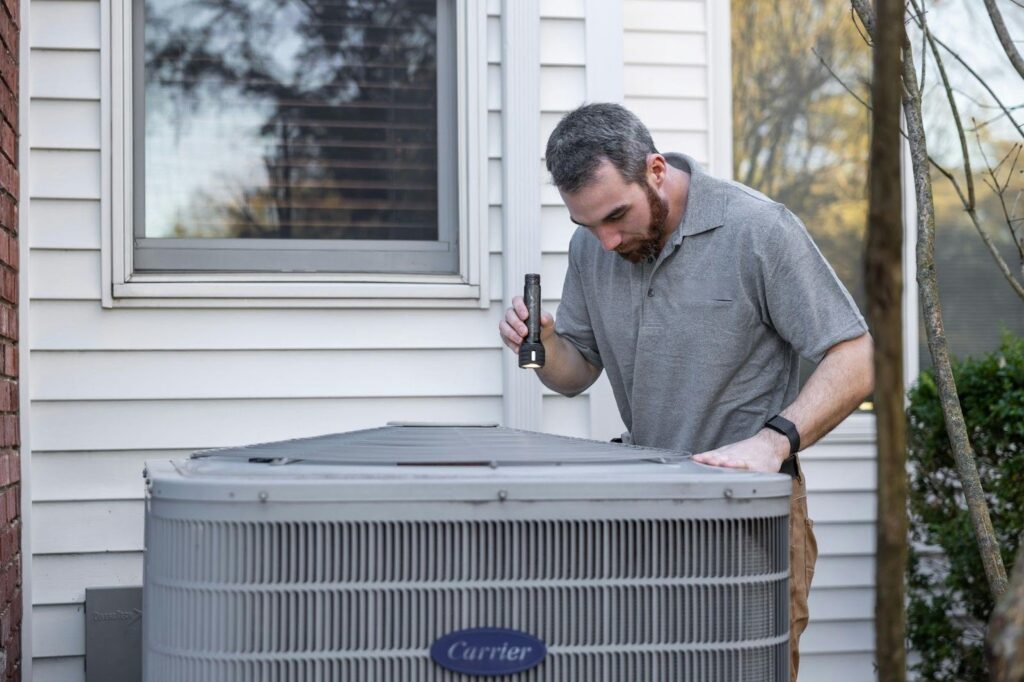
While you’re doing the basics, this is usually when I remind owners to check the outdoor heat-pump unit — especially if you rely on one for a rental.
Snow, leaves, branches… they all drift in and crowd the system. According to R&R Heating and Cooling, a solid checklist for heat pump maintenance includes changing the filters, cleaning the coils, checking the thermostat programming, and scheduling a full tune-up before winter.
When you skip this, the unit struggles. And when it struggles, performance drops and bills rise. It’s not fun — but it matters.
What Actually Saves You Money (Not the Fancy Stuff)
You know how some guides jump straight into buying new equipment? That’s not this. Rentals have margins. And HVAC upgrades… they’re not cheap.
(i) Seal What’s Leaking
Warm air is like a teenager — it escapes the second you’re not looking. But here’s the kicker: the Department of Energy has reported that sealing and insulating ducts can improve HVAC efficiency by up to 20%, depending on the home.
Think about that. You could drop a couple of hundred bucks on duct sealing and get the same bump that people chase by throwing thousands at new units.
(ii) Don’t Forget Thermostat Logic
Ever walk into a rental between tenants and find the thermostat cranked to 82° “just to warm up quickly”? Yeah. Humans do strange things with knobs.
Smart thermostats — or even cheap programmable ones — help stop those “oops” moments. The EPA has long highlighted that proper scheduling can shave around 10% off heating costs annually. Ten percent for simply not overheating empty rooms? That’s easy money.
When You Should Spend (Even If You Don’t Want To)
Still — and I say this with respect — not every system deserves to survive another winter.
If your furnace is older than some of your tenants, you may be better off replacing parts proactively. Blower motors, cracked duct sections, failing igniters… you name it.
A sudden mid-winter repair call can easily hit $300–$900, according to national HVAC service averages. And a dead furnace? You’re looking at $3,000–$7,000, depending on the system type. Sometimes the “expensive” fix is the cheaper one long-term.
It’s just hard to see it in the moment.
A Realistic Seasonal Rhythm (Because Chaos Isn’t a Strategy)
Here’s the routine I’ve seen work for rental owners who don’t want surprises:
- Early Fall: Replace filters, check ducts, and clear the outdoor unit.
- Before the First Freeze: Inspect the thermostat and airflow, confirm vents aren’t blocked by furniture (happens constantly).
- Mid-Winter: Remove debris or snow from heat-pump units; listen for struggling blowers.
- Late Winter: Plan any preventive repairs before peak-season pricing hits.
Simple. Predictable. And shockingly effective.
The One People Don’t Talk About Enough
Humidity. Weird right? But it’s real. Too dry and the air feels scratchy; too moist and the system works harder, you feel sticky, comfort drops. Most rental-prep plans ignore it.
A system that handles temperature but neglects humidity is like someone wearing a coat but boots filled with water. Comfort compromised. And tenants notice — even if they don’t admit it.
Final Thoughts
Winterizing doesn’t have to feel like a scramble or an expense you dread each year. It can be light, steady, and almost rhythmic once you get the hang of it. And the systems — these metal beasts sitting in closets and basements — they respond well to a little care.
Funny how machines and people have that in common.