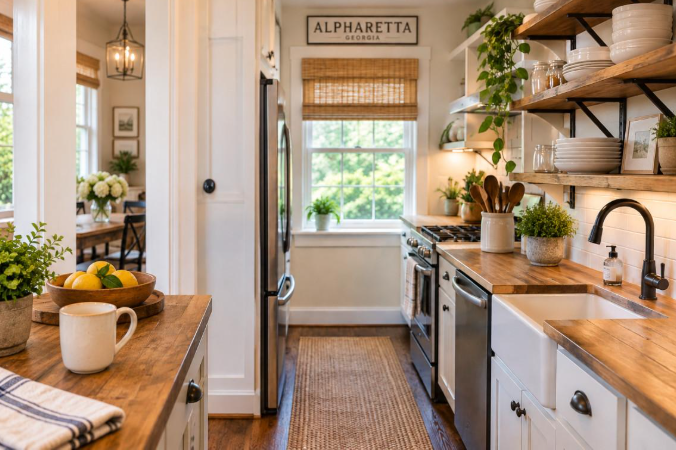
The first winter in a cottage outside Alpharetta can make you rethink everything you thought you knew about kitchen space. Imagine standing in a narrow galley kitchen at six in the morning, coffee in hand, wondering how you’ll fit a Thanksgiving dinner into a room barely wide enough for two people to pass.
If you’re used to a larger kitchen, the adjustment can be surprisingly frustrating. You may be accustomed to spreading ingredients across several counters, leaving small appliances out, and opening cabinets without thinking about where everything will go. In a cottage, every inch has a purpose.
At first, you may look for ways to add more storage or try to make the kitchen work like the one you left behind. The easier approach is to change how you use the space instead.
If you’re considering cottage living outside Alpharetta, Roswell, Milton, or elsewhere in North Georgia, that’s one of the biggest adjustments to expect. A smaller home asks you to rethink some everyday habits, but it can also give you a simpler space that’s easier to care for and more personal.
Why We Chose Cottage Living
We didn’t originally plan to downsize. The cottage began as a guest space on our property, but over time I found myself spending more time there. It was quieter and simpler, and there was something appealing about having less house to keep up with.
The smaller footprint also forced me to think differently about what I actually needed.
In a larger house, it’s easy to keep things simply because there is somewhere to put them. In the cottage, there isn’t always an extra cabinet, closet, or corner waiting for something I haven’t used in years.
That took some getting used to.
There are practical advantages, too. A smaller home generally means less space to heat, cool, furnish, and clean. But those benefits don’t mean everything is easier. The kitchen made that clear almost immediately.
If you’d like to see more of the home itself, you can also take a look at this Home Worthy Tour, which offers a closer look at the home’s design and character.
Learning to Cook in a Galley Kitchen
Every room in a cottage feels smaller, but the kitchen is where you notice it most.
Counter space became something I thought about constantly. If I was preparing dinner, I couldn’t leave ingredients spread out while working on something else. A drawer that would have held one category of kitchen supplies in our old house might have to accommodate several.
I also learned that some appliances have to earn their space.
My stand mixer was a good example. In a larger kitchen, I could put it away and bring it out whenever I needed it. In the cottage, moving it in and out became such a hassle that I either had to give it a permanent spot or admit I wasn’t going to use it very often.
A few changes made a noticeable difference:
- Open shelving: Keeping everyday dishes within easy reach made better use of the available wall space and helped the kitchen feel less closed in.
- A rolling cart: It gave me an extra work surface when I needed one and could be moved when I needed the floor space.
- Hooks inside cabinet doors: Measuring cups, pot holders, and similar items could be kept close by without taking up another drawer.
- Fewer appliances: I became much more selective about what deserved permanent storage space.
The biggest change, though, was psychological.
I stopped trying to find a place for everything and started asking whether everything needed to be there in the first place.
That sounds obvious. It wasn’t obvious to me when I moved in.
Older Cottages Can Mean Older Appliances
One thing I hadn’t considered carefully enough was the age of the appliances.
Older cottages in the area can have appliances and home systems that were installed or updated at different times. Our cottage was no exception. Some things had clearly been updated while other parts of the house had been around much longer.
That became very real one August when our refrigerator started running warm.
It happened during a stretch when we had house guests, which made the timing particularly inconvenient. I didn’t have much experience troubleshooting refrigerators, and I certainly didn’t want to spend several days wondering whether the food inside was safe.
A neighbor recommended Appliance EMT for same-day refrigerator repair in Alpharetta, and someone came out that afternoon.
The bigger lesson had little to do with the refrigerator itself. I hadn’t thought about having a repair contact until something actually went wrong.
Now I think differently about older-home maintenance. It makes sense to keep a short list of people you may need before an emergency happens, whether that’s an appliance repair technician, HVAC professional, or plumber familiar with older homes.
That doesn’t mean an older cottage is destined to have constant problems. It simply means that knowing the age and condition of the major systems can save some stress later.
Humidity, Pollen, and Other North Georgia Realities
Cottage living outside Alpharetta also means paying attention to the local environment.
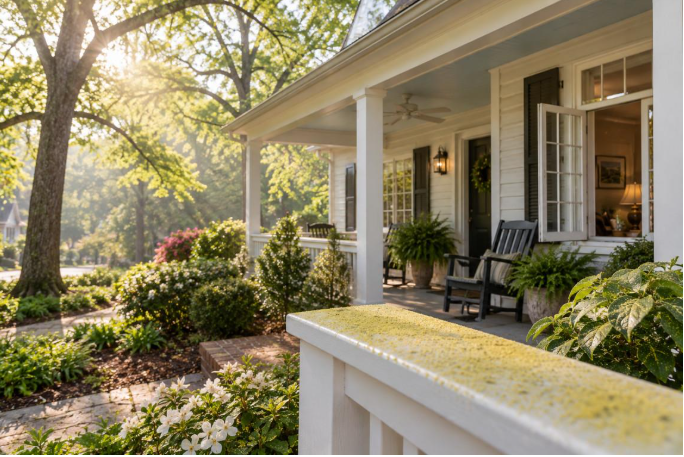
Spring pollen is probably the most obvious example. That familiar yellow-green coating doesn’t stay outdoors. It finds its way onto windows, porches, furniture, and just about every other surface.
One advantage of living in a smaller house is that there are fewer rooms and surfaces to clean. I can deal with the pollen without feeling like the cleaning project is endless.
Summer humidity is a different matter. In an older structure, changes in moisture and temperature can affect doors and windows. Good airflow and ventilation become especially important for keeping the house comfortable.
The age of the cottage matters, too. Older properties can have their own quirks depending on when they were built, how they were constructed, and which parts have been updated.
If you’re considering buying or moving into an older cottage, I’d want to know as much as possible about the home’s history. That includes major repairs, plumbing, appliances, windows, and other systems that could affect maintenance down the road.
And then there are the reasons I enjoy living here in the first place.
Being close to places such as Big Creek Greenway and the farmers markets around downtown Alpharetta gives the area a sense of place. Mature trees and smaller lots can also create a very different atmosphere from newer subdivisions where everything feels planned.
Those details are easy to overlook when you’re focused on square footage.
What I Wish I’d Known Before Moving In
If I could go back, I would approach the cottage differently.
First, I wouldn’t try so hard to recreate the way I lived in a larger house. The kitchen doesn’t need to accommodate every appliance, serving piece, and gadget I’ve accumulated over the years.
It needs to support the way I actually cook.
Second, I’d pay more attention to the age and condition of the home’s major systems before moving in. Knowing when the refrigerator, HVAC system, plumbing, windows, and other components were installed or updated gives you a better idea of what you’re working with.
And I would have made a list of local repair professionals much earlier.
The refrigerator incident wasn’t a disaster, but it was a good reminder that small problems become more stressful when you’re trying to find help while you’re dealing with them.
Most importantly, I would have given myself more time to adjust.
For the first season or two, I noticed what the cottage didn’t have. Eventually, I started noticing what it did have: less cleaning, fewer things to maintain, and rooms that felt easier to live in, not just bigger.
That change in perspective made a bigger difference than any storage solution.
Frequently Asked Questions
Is cottage living more affordable than a full-size home near Alpharetta?
It can be, particularly because a smaller home generally requires less space to heat, cool, furnish, and maintain. However, an older cottage can come with repair or maintenance expenses, especially when appliances or major systems are older.
What’s the biggest adjustment when moving into a small cottage kitchen?
For me, it was learning that I couldn’t keep everything I had simply because I had always owned it. Storage becomes much easier when you focus on the things you actually use rather than trying to find a place for every item.
How should you prepare for appliance repairs in an older cottage?
Find out how old the major appliances are and keep the contact information for a trusted local repair service. When our refrigerator started running warm, having a local recommendation made it much easier to deal with the problem.
Does North Georgia’s climate affect cottage maintenance?
Yes. Humidity, seasonal pollen, and changing temperatures can all affect how you clean and maintain an older home. Paying attention to ventilation, doors, windows, appliances, and other systems can help you catch problems before they get worse.
Making Peace With a Smaller Home
Cottage living outside Alpharetta won’t suit everyone.
If you need a large kitchen, extensive storage, or plenty of room for everything you own, a cottage may feel restrictive. I certainly felt that way during my first few months.
But eventually, the limitations became part of the appeal.
The small kitchen taught me to keep fewer things. The smaller footprint made cleaning less overwhelming. Living in an older home made me pay closer attention to maintenance instead of assuming everything would work indefinitely.
I still notice the lack of counter space when I’m cooking a big meal. I still have to think carefully about where something will go before bringing it home.
But I don’t see the cottage as a smaller version of the house I used to live in anymore.
It’s a different way of living. And once I stopped trying to make it something it wasn’t, the space started to feel less like a limitation and more like enough.