
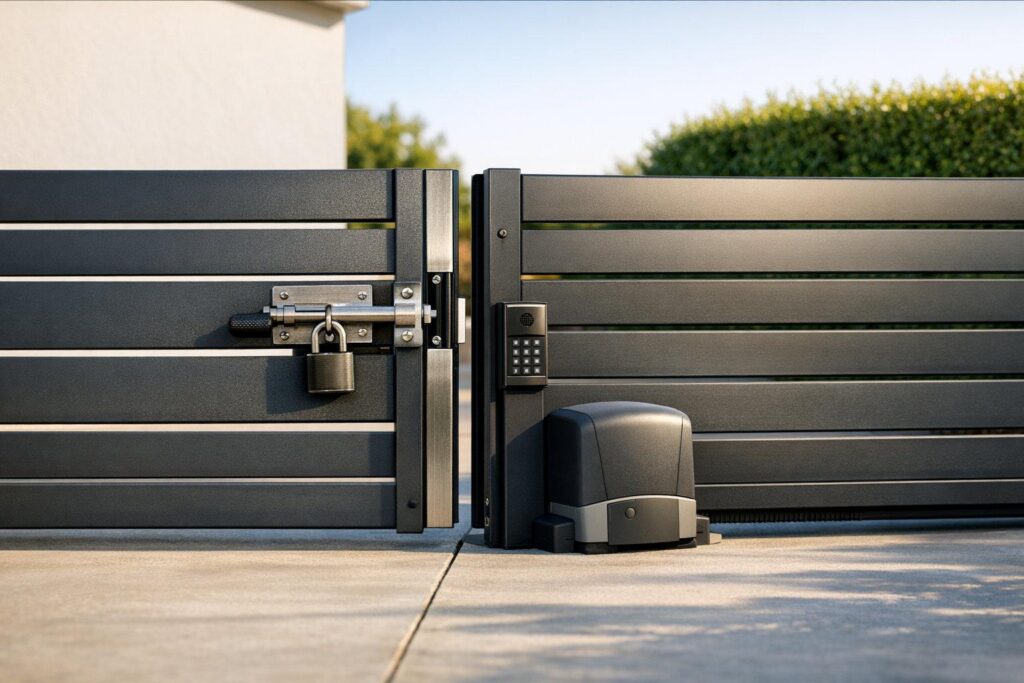
Homeowners can choose between manual and automatic gate systems to enhance property security and convenience. Each system brings unique advantages and considerations, from daily functionality to long-term reliability. Understanding the core differences in operation, safety, usability, and maintenance helps homeowners make informed decisions for their specific needs.
Perimeter gates safeguard homes by controlling both access and visibility, making them a vital component of any security strategy. When considering an upgrade or installation, most homeowners weigh factors like frequency of use, property layout, and desired level of automation. DuraServ residential custom gate installation services are often sought in situations where specific performance, safety, or security needs must be addressed. By comparing manual and automatic systems, you can identify which features align best with your household’s security goals and lifestyle.
Key operational differences between gate system types
Manual gate systems rely on direct physical effort to open and close, while automatic gate systems use powered mechanisms controlled remotely or through access devices. Day-to-day, a manual gate requires you to leave your vehicle or entry point to operate it, which shapes its convenience and security profile.
Both manual and automatic gates are commonly available as swing or sliding designs. Swing gates pivot on hinges and suit wider driveways with room to arc open, while sliding gates move horizontally and are often chosen for properties with limited access space. The method of operation impacts not only installation requirements but also which system fits your property’s dimensions and traffic flow.
Security factors and access control solutions to consider
Security considerations hinge partly on locking mechanisms and access control. Manual gates typically rely on keyed locks, padlocks, or combination mechanisms, whereas automatic gates may use keypads, remotes, or integrated smart access systems. Automatic gates can include additional security features, like timed locking or rolling code remotes, which may improve resistance to certain forms of tampering.
Physical resilience is important in both systems. Reinforced locks, solid frames, and tamper-resistant fittings can help slow forced entry attempts with either approach. Visibility features such as slats or vision panels, and additional safety devices around the access point, can support deterrence and improve driveway awareness.
User convenience, accessibility, and real-world usability
The convenience of each system depends on how often and under what circumstances gates are used. Manual gate systems are straightforward, but may become cumbersome during frequent daily routines, harsh weather, or at nighttime, especially when illumination is limited. Automatic gates remove the need to exit a vehicle, which can be an advantage in poor conditions or for some users with mobility challenges.
Accessibility factors also influence gate choice for many households. With manual gates, the operation can be physically demanding, whereas automatic systems can be adjusted for opening speeds and remote operation. Homeowners might also consider how reliable system response is during peak hours, ensuring entry is smooth and delays are minimal in high-use scenarios.
Maintenance, reliability, and long-term ownership costs
Both gate types present different maintenance demands over time. Manual systems can experience wear on hinges, latches, and alignment, sometimes evidenced by sagging or squeaking. Regular lubrication and seasonal checks can help extend their service life and prevent avoidable repairs.
Automatic gate systems require attention to motor reliability, sensor calibration, and electronics. Issues may arise from electrical faults, power surges, or debris interfering with sensors. Preventive maintenance, including mechanical inspection and system checks, can reduce the risk of malfunction and extend reliability.
Upfront costs for automatic gates tend to be higher due to motors, safety sensors, and potential electrical upgrades. Over time, homeowners should factor in ongoing expenses for both repairs and periodic professional servicing. Manual gates generally cost less to purchase and install, but may require increased upkeep if exposed to harsh environments or heavy use.
Choosing the best fit for your property needs
Selecting between manual and automatic gate systems involves balancing property layout, intended gate use, household routines, and willingness to maintain hardware. Properties with long or steep driveways, or those requiring frequent opening, may justify the added complexity and cost of automatic systems. Manual gates, conversely, can suit smaller plots, lower-traffic properties, or situations where hands-on operation is not a burden.
Professional assessment can be useful for challenging environments, such as sloped driveways or where security needs are particularly high. Regardless of your choice, regular maintenance, attention to system integrity, and informed selection of safety features help ensure your perimeter gate supports your home security objectives over the long term with DuraServ.


