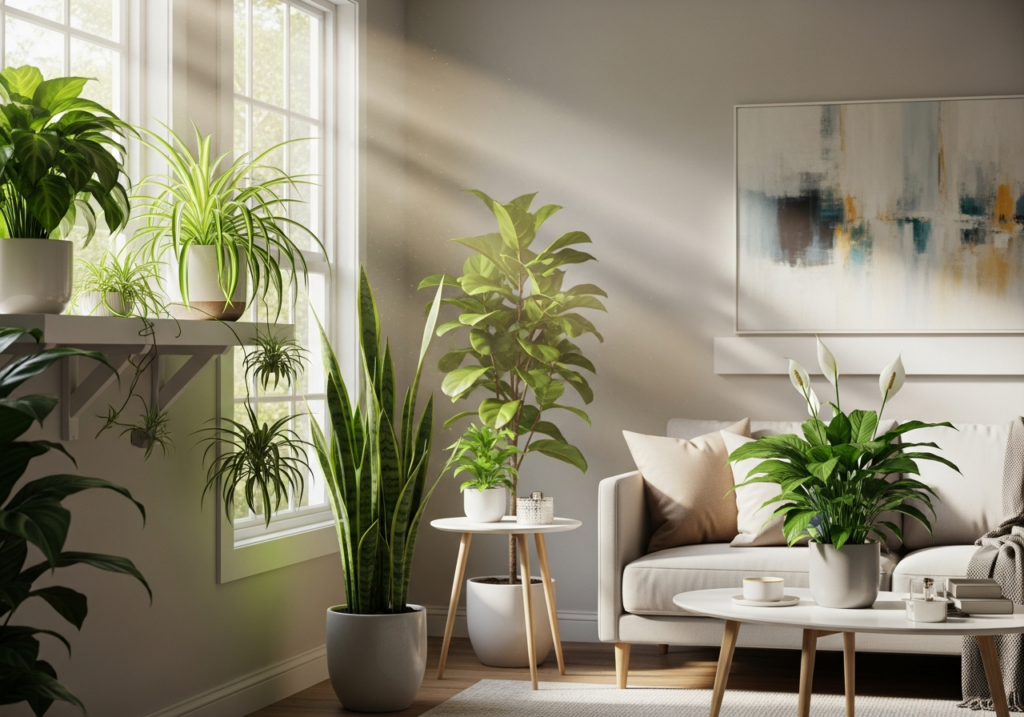
The air inside your home may be more polluted than you think. Everyday sources — synthetic furniture, household cleaners, cooking fumes, and building materials — steadily release harmful compounds into enclosed spaces. Houseplants offer a natural, research-backed way to address this, improving air quality through processes like phytoremediation and photosynthesis.
How Houseplants Improve Indoor Air Quality
In larger living areas, tall and large indoor plants bring substantial foliage surface area into play, making them especially well-suited for meaningful toxin absorption at scale. This guide covers the underlying mechanisms, the most effective species, and practical strategies to help you make informed, impactful choices.
Plants function as passive air filters through several interconnected biological processes. Phytoremediation enables leaves and roots to absorb volatile organic compounds (VOCs) — including formaldehyde and benzene — while soil microbes quietly neutralize residual pollutants, all without drawing a single watt of electricity. Through photosynthesis, plants consume CO₂ and release oxygen; some species, like the snake plant, continue this exchange at night, which makes them a natural fit for bedrooms. Transpiration adds moisture to the air, reducing dust suspension and discouraging the dry conditions that mold tends to favor. Research suggests that plant-filled spaces can harbor up to 50% fewer airborne microbes than rooms without greenery.
Key mechanisms at a glance:
– Absorption and filtration of VOCs and fine particulates
– Humidity regulation via transpiration to suppress dust and allergens
– Physical trapping of airborne particles on leaf surfaces
Scientific Evidence: What Research Shows
NASA’s foundational study on plants removing VOCs such as benzene and formaldehyde remains one of the most cited works in this field, and it helped spark widespread interest in biophilic indoor design. More recent peer-reviewed analyses, however, offer a more measured view: while the mechanisms are well-established, a measurable impact in a typical room may require 10–15 plants — considerably more than most households maintain. That said, supportive findings from researchers like Wolverton and Stapleton confirm real reductions in ultrafine particles and airborne pathogens, along with improved humidity levels in controlled settings. The honest conclusion is that houseplants work best as a valuable complement to ventilation, not a replacement for it.
Top Houseplants for Air Purification and Their Benefits
Certain species consistently perform well in both research settings and everyday environments like offices and bedrooms.
Plant
Key Pollutants Removed
Light Needs
Care Level
Snake Plant
Formaldehyde, benzene
Low
Easy
Spider Plant
Carbon monoxide, VOCs
Medium
Easy
Bamboo Palm
Benzene, formaldehyde
Medium
Moderate
Peace Lily
Multiple VOCs
Low
Moderate
The snake plant is a standout choice for beginners — forgiving, low-maintenance, and one of the few plants that produces oxygen at night. The spider plant does well in indirect light and is particularly effective against carbon monoxide. In humid spaces, the bamboo palm pulls double duty by boosting moisture while filtering benzene. Meanwhile, the peace lily thrives in low-light rooms and offers some of the broadest-spectrum VOC filtration of any common houseplant.
Practical Tips for Maximizing Air Quality Benefits
Placement matters more than most people realize. Positioning plants near high-pollution zones — kitchens, home offices, or spots near printers — concentrates their filtration where it counts most. In open-plan spaces, larger-foliage varieties deliver greater surface coverage. Grouping plants together creates a localized humidity zone, and wiping down leaves regularly removes accumulated dust that would otherwise impair their filtering capacity.
- Monitor soil moisture carefully to prevent mold from taking hold
- Rotate plants periodically to ensure even light exposure
- Match species to your room’s size, natural light, and your own maintenance routine
Long-Term Health and Wellness Advantages
Living with indoor greenery over time is associated with reduced respiratory strain, lower stress levels, and sharper focus — benefits tied to both measurable air quality improvements and the psychological effects of biophilic design. Allergy sufferers may find particular relief, as plants that regulate humidity help keep airborne irritants in check. In a sense, the ecological balance that phytoremediation creates indoors mirrors the air-cleaning systems found in nature — a quiet, sustained advantage that compounds with consistent care.
Bringing It All Together for Fresher Indoor Spaces
Houseplants deliver genuine, research-supported air quality benefits when chosen thoughtfully and maintained with consistency. The impact is modest but real — and well within reach for anyone willing to start small and build from there. Begin by identifying the main pollution sources in your home, then introduce two or three well-matched species and give them several weeks to settle in before drawing conclusions.
Quick Start Checklist:
– Identify key pollution sources in your home
– Select 2–3 suitable plants based on available light and care capacity
– Place them strategically in high-use areas and maintain them consistently