Choosing a metal roof is often driven by the promise of durability, energy efficiency, and long-term value, but those benefits only materialize when key decisions are made early in the process. Homeowners researching metal roof contractors quickly learn that installation quality matters just as much as the material itself. Before work begins, understanding how design choices, installation methods, and environmental factors intersect can prevent costly mistakes and ensure the roof performs as intended for decades.
Not All Metal Roofing Systems Perform the Same
Metal roofing is not a single product, but rather a large category. Under stress, temperature fluctuations, and weather exposure, panels, shingles, standing seam systems, and metal tiles all exhibit distinct behaviors, which is why metal roof installation requires careful consideration of climate, structure, and long-term goals. While some systems prioritize commercial-level performance, others are primarily built for residential aesthetics.
Strength and longevity are directly impacted by gauge, or the thickness of the metal. Although they can withstand denting and warping, thicker panels may need more structural support. Although thinner panels are less expensive initially, they may wear out more quickly in hostile environments. Homeowners can better match expectations with actual performance by being aware of these trade-offs.
Climate and Environment Should Drive Material Choice
A metal roof that performs well in one area might not do so in another. Whereas regions with significant snowfall require systems designed for snow shedding and structural load, coastal settings need coatings that are resistant to corrosion from salt air. Reflective coatings lessen heat absorption and prevent premature fading of the metal finish in areas with high levels of sun exposure.
Early maintenance problems are frequently the result of ignoring environmental conditions. The roof will age predictably rather than deteriorate unevenly if materials appropriate for the local weather patterns are chosen.
Underlayment Is Just as Important as the Panels
Many homeowners ignore what’s underneath the apparent metal panels. Underlayment acts as a supplementary leak prevention measure, a moisture barrier, and a thermal buffer. The lifespan of the roof system can be shortened, moisture can be trapped, and energy efficiency can be decreased with the incorrect underlayment.
Because metal roofs can transfer more heat than conventional shingles, high-temperature underlayments are frequently required. Even if the panels are of the highest caliber, cutting corners here can compromise the benefits of metal roofing.
Fastening Systems Influence Long-Term Reliability
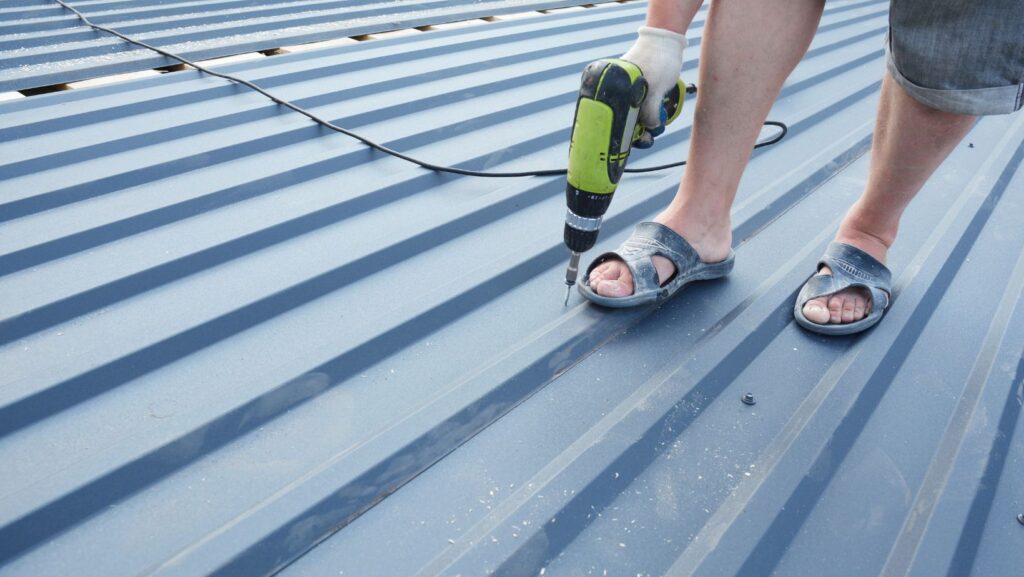
The roof’s attachment method is just as important as its composition. Although exposed fastener systems are less expensive, they depend on screws and washers that may become loose over time as a result of expansion and contraction. Although hidden fastening systems are more expensive, they lower the danger of leaks and enhance aesthetics.
One feature that distinguishes metal roofs is thermal mobility. Fastening systems must allow for the daily expansion and contraction of panels without putting undue strain on the metal. Oil canning, noise problems, or early failure can result from improper fastening.
Ventilation and Insulation Must Be Planned Together
Energy efficiency is not guaranteed by a metal roof alone. Comfort and structural integrity may be jeopardized by heat and moisture buildup in the absence of adequate ventilation. In order to prevent condensation, insulation must be put in a manner that is compatible with the roofing system.
The local climate, roof slope, and attic space should all be taken into consideration when designing ventilation systems. The metal roof functions as a thermal asset rather than a heat conductor when ventilation and insulation are combined.
Structural Readiness Should Never Be Assumed
Although metal roofing is frequently lighter than conventional materials, structural analysis is still necessary. Older homes may have framing that needs to be reinforced before installation, uneven decking, or hidden water damage.
If this phase is skipped, there may be eventual problems with load distribution, fastening, or noticeable waviness. By addressing structural issues early on, the roof and the house underneath it are both protected.
Warranties Depend on Installation Details
There are stringent installation restrictions in many metal roofing warranties. Even if the materials themselves are flawless, coverage may be void if certain procedures are not followed. Homeowners should be aware of how to maintain warranty protection and which shortcuts jeopardize it.
This covers authorized fasteners, suggested underlayment, and certain flashing methods. Documentation is important, and long after installation is finished, the investment is protected by adhering to the manufacturer’s requirements.
Final Thoughts
A metal roof can be one of the most durable upgrades a homeowner makes, but only when critical decisions are handled before work begins. Material selection, fastening systems, underlayment, ventilation, and structural readiness all shape how the roof performs over decades. By working with knowledgeable metal roof contractors and approaching installation as a system rather than a single product, homeowners can ensure their investment delivers lasting protection, efficiency, and peace of mind.